
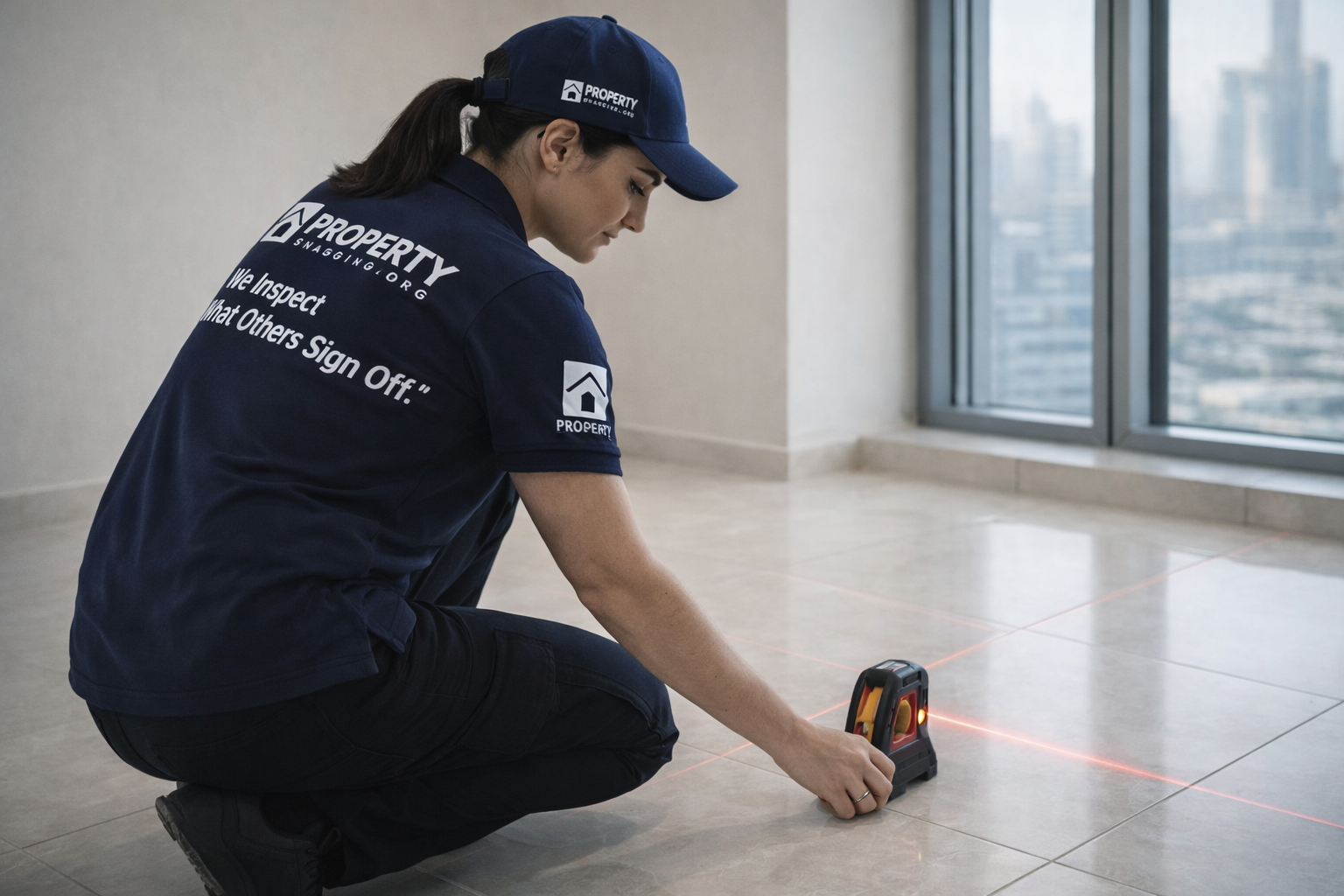
Rain Damage in Dubai Homes (2026): How Snagging Inspections Support Insurance Claims
Dubai’s unprecedented rainfall in 2024–2025 changed how homeowners, investors, and insurers view property risk. Villas flooded, balconies leaked, ceilings collapsed, and mold appeared in properties that were previously considered “new” or “premium.”
For many owners, the biggest shock was not the rain itself—but discovering that hidden construction defects made their homes vulnerable.
This is where professional property snagging inspections play a critical role—not only in identifying rain-related damage, but also in supporting insurance claims, liability assessment, and developer accountability.
This guide explains how rain damage occurs in Dubai homes, why many insurance claims fail, and how snagging inspections help property owners protect their financial and legal position.
Why the 2025 Rains Were a Wake-Up Call for Dubai Property Owners
Dubai properties are designed for heat, not prolonged rainfall. When record-breaking rain hit the city, it exposed weaknesses that had gone unnoticed for years.
Common outcomes included:
Ceiling water ingress
Balcony flooding
Electrical short circuits
AC system failures
Wall dampness and mold
Basement and parking seepage
In many cases, damage occurred not because of the rain itself, but due to construction shortcuts and incomplete waterproofing.
Rain vs Defect: Why Insurance Claims Get Rejected
One of the most frustrating experiences for homeowners after rain damage is an insurance claim rejection.
The most common reason?
“Damage caused by construction defects, not an insured event.”
Insurance providers typically differentiate between:
Sudden accidental damage (often covered)
Pre-existing defects or poor workmanship (usually excluded)
Without technical evidence, homeowners struggle to prove where responsibility lies.
Where Snagging Inspections Fit Into Rain Damage Cases
A professional snagging inspection acts as a technical investigation, not just a defect list.
It helps determine:
Whether water ingress is due to faulty construction
If waterproofing systems were incorrectly installed
Whether damage existed before extreme weather
If defects violate approved standards
This distinction is critical for insurance validation and developer liability.
Common Rain Damage Sources Identified Through Snagging
1. Balcony & Terrace Waterproofing Failures
Balconies are one of the most common leakage points.
Snagging inspections frequently identify:
Incorrect slope toward drains
Blocked or undersized drain outlets
Missing waterproofing upturns
Poor tile grouting
Failed sealant at door thresholds
Rainwater that pools on balconies often migrates inside living spaces.
2. Roof Slab & Parapet Defects (Villas & Penthouses)
Roof areas are exposed directly to rain and temperature fluctuations.
Common findings include:
Cracked waterproofing membranes
Improper termination at parapet walls
Ponding water due to uneven screed
Exposed expansion joints
Deteriorated sealants
Snagging identifies whether these were installation defects, not weather damage.
3. Window & Façade Sealing Issues
Windows are a frequent entry point for rainwater.
Inspections often reveal:
Incomplete silicone sealing
Gaps between frame and wall
Incorrect flashing installation
Poor drainage channels
These defects allow rainwater to bypass the façade system.
4. Bathroom & Wet Area Leaks
Heavy rain often exposes weaknesses in internal waterproofing.
Snagging inspections detect:
Failed waterproofing under tiles
Incorrect drain installation
Missing waterproofing at pipe penetrations
Water migration through walls
Moisture meters and visual patterns help trace the source.
5. AC Drainage & Service Penetration Failures
AC systems are not designed to handle excess rainwater.
Defects include:
Improperly routed condensate lines
Unsealed service penetrations
Blocked drainage points
Water backing up into ceilings
These are construction and installation issues—not weather damage.
How Snagging Reports Strengthen Insurance Claims
Insurance companies rely on documentation, not assumptions.
A professional snagging report provides:
Time-stamped photographic evidence
Clear identification of defect origin
Technical explanations (not opinions)
Distinction between defect vs event damage
This helps insurers assess:
Whether damage was sudden
If defects pre-existed the rain
Who bears responsibility
Without this evidence, claims often stall or fail.
Snagging vs Post-Damage Inspection: What’s the Difference?
Many owners wait until after damage occurs. This is risky.
Pre-Handover or Preventive Snagging
Identifies vulnerabilities early
Documents baseline condition
Prevents future disputes
Post-Damage Snagging
Traces root cause
Supports insurance and legal claims
Establishes liability
Both are valuable—but preventive snagging saves far more money.
Developer Liability After Rain Damage
If rain exposes defects that:
Violate approved drawings
Result from poor workmanship
Occur within the DLP period
…the developer may remain responsible.
A snagging inspection helps:
Link damage to construction faults
Support formal defect notifications
Strengthen rectification demands
This is particularly important in RERA-regulated projects overseen by the Real Estate Regulatory Agency, where compliance matters.
Why Visual Inspections Are Not Enough
Many defects causing rain damage are not visible immediately.
Professional snagging uses:
Moisture detection tools
Drainage testing
Access panel inspections
Functional testing
This allows inspectors to identify hidden moisture paths that homeowners miss.
Mold Growth: The Silent Consequence of Rain Damage
Rain damage does not end when water dries.
Undetected moisture leads to:
Mold growth behind walls
Ceiling deterioration
Indoor air quality issues
Health risks
Snagging inspections identify moisture retention zones early, reducing long-term damage.
Insurance Timelines & Why Speed Matters
Most insurance policies require:
Immediate notification
Evidence collection
Cause identification
Delays weaken claims.
A prompt snagging inspection ensures:
Early documentation
Clear cause analysis
Faster claim processing
Waiting too long can result in rejection.
Common Reasons Insurance Claims Fail (and How Snagging Helps)
| Reason for Rejection | How Snagging Helps |
|---|---|
| Pre-existing defect | Documents defect origin |
| Poor maintenance | Distinguishes defect vs neglect |
| No proof of cause | Provides technical evidence |
| Late reporting | Enables early detection |
| Wear and tear | Identifies installation faults |
Investor Perspective: Protecting Rental Properties
For landlords, rain damage means:
Tenant complaints
Vacancy periods
Emergency repairs
Income loss
Snagging inspections:
Reduce reactive maintenance
Improve property resilience
Protect rental yield
This is especially important for portfolio investors.
Why Rain Damage Has Changed Buyer Behavior in Dubai
Since 2025, buyers are:
More cautious at handover
Requesting independent inspections
Questioning waterproofing quality
Avoiding rushed acceptance
Snagging inspections are now viewed as essential, not optional.
Preventive Snagging: The Smarter Approach
Preventive snagging focuses on:
Waterproofing verification
Drainage performance
Sealant quality
Roof and balcony systems
This reduces the risk of rain damage before it occurs.
Final Thoughts: Rain Exposed What Snagging Prevents
Dubai’s rain events did not create defects—they revealed them.
A professional snagging inspection:
Identifies vulnerabilities
Supports insurance claims
Strengthens developer accountability
Protects long-term property value
In a changing climate, proactive inspection is the smartest protection a property owner can take.
