
Introduction
New build properties are often marketed as flawless, modern, and maintenance-free. However, real-world inspections consistently prove otherwise. Across thousands of snagging inspections, the same types of defects appear again and again—regardless of developer, location, or price point. Understanding these repeated defects in new build properties helps buyers, investors, and landlords protect themselves before handover and avoid costly repairs later.
This guide breaks down the most common defects found repeatedly in new homes, explains why they occur, and shows how professional snagging inspections identify them early.
Why Do the Same Defects Keep Appearing in New Builds?
Repeated defects are rarely accidents. They are usually the result of:
- Tight construction timelines
- Multiple subcontractors working without coordination
- Inadequate quality control checks
- Cosmetic fixes applied just before handover
- Reliance on visual inspections only
When speed takes priority over quality, defects repeat across projects—even in luxury developments.
1. Hairline Wall and Ceiling Cracks
Hairline cracks are one of the most frequently reported post-handover defects.
Why they happen:
- Concrete shrinkage during curing
- Thermal expansion due to temperature changes
- Poor joint treatment between structural elements
- Rushed plastering before full slab settlement
Why they matter:
While many are cosmetic, some cracks indicate deeper structural movement or poor workmanship and may widen over time if ignored.
2. Poor Paint Finishing and Surface Defects
Fresh paint often hides imperfections—but only temporarily.
Common issues include:
- Uneven paint texture
- Roller marks and visible patchwork
- Paint peeling within months
- Stains bleeding through walls
These defects point to poor surface preparation, moisture presence, or incorrect paint application.
3. Uneven Flooring and Tile Lippage
Flooring defects are among the most repeated snagging findings.
Typical problems:
- Uneven tile levels
- Hollow or loose tiles
- Poor grout finishing
- Cracked edges and corners
Root causes:
- Incorrect adhesive usage
- Inadequate leveling before tile installation
- Rushed installation without curing time
These issues worsen with use and often require full tile removal later.
4. Doors and Windows Misalignment
Misaligned doors and windows appear in almost every multi-unit development inspection.
Signs include:
- Doors not closing smoothly
- Gaps between frame and shutter
- Scraping sounds while opening
- Poor sealing allowing air or dust entry
Why it happens:
Frames are installed before final settlement or without proper calibration, leading to movement once the building stabilizes.
5. Plumbing Installation Defects
Plumbing issues are among the most expensive defects if missed at handover.
Repeated findings:
- Low water pressure
- Improper slope in drainage lines
- Leaking joints behind walls
- Loose sanitary fittings
These defects often remain hidden until occupancy—when damage has already spread.
6. Electrical Defects and Safety Risks
Electrical defects are common and potentially dangerous.
Frequently observed issues:
- Loose sockets and switches
- Incorrect polarity
- Inconsistent earthing
- Overloaded circuits
Visual checks alone cannot detect many of these problems, making professional testing essential.
7. HVAC and Air Conditioning Issues
Even new AC systems frequently fail performance checks.
Common defects:
- Poor cooling distribution
- Incorrect thermostat calibration
- Water leakage from indoor units
- Noisy operation
These issues usually stem from poor duct alignment, incorrect refrigerant charging, or rushed commissioning.
8. Waterproofing Failures
Waterproofing defects are silent but destructive.
Typical locations:
- Bathrooms
- Balconies
- Rooftops
- Wet kitchens
Why they’re repeated:
Waterproofing layers are often hidden under tiles, making shortcuts easy—and leaks hard to trace later.
9. Inadequate Sealing and Silicone Work
Silicone defects appear small but cause major long-term problems.
Repeated problems:
- Gaps around bathtubs and sinks
- Poorly sealed window edges
- Incomplete balcony joints
Over time, these gaps allow moisture ingress, leading to mold and structural deterioration.
10. Incomplete or Cosmetic “Cover-Up” Repairs
One of the most overlooked defects is temporary cosmetic fixes done before inspection.
Examples:
- Fresh paint hiding damp patches
- Silicone covering cracks
- Loose fittings tightened temporarily
Without a systematic inspection, these issues resurface after handover—outside the developer’s immediate responsibility window.
Why Repeated Defects Are a Bigger Risk Than Unique Ones
Repeated defects indicate systemic construction issues, not one-off mistakes. When the same problems appear across units and projects, it shows:
- Weak quality assurance processes
- Inconsistent subcontractor standards
- Lack of independent inspection
This makes snagging inspections essential—not optional.
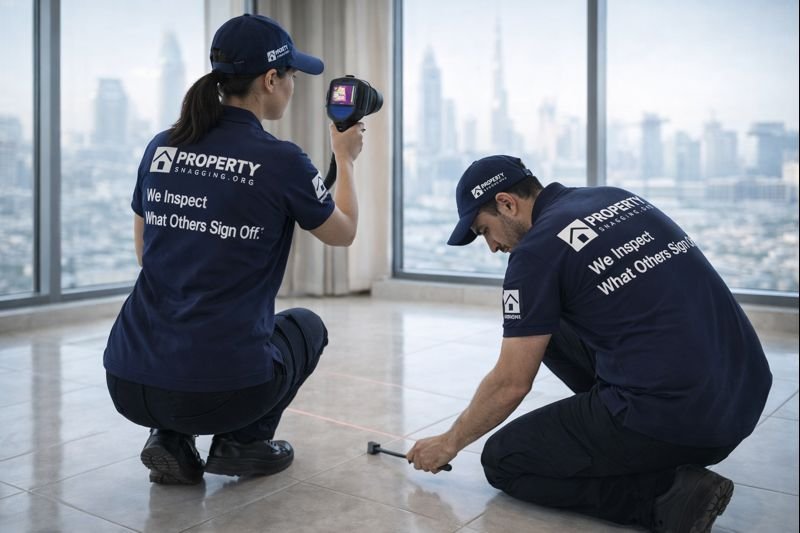
How Professional Snagging Inspections Catch These Defects
Professional snagging inspections go beyond surface checks by using:
- Detailed room-by-room defect logging
- Functional testing of MEP systems
- Moisture and leakage detection
- Alignment and level verification
- Documentation suitable for developer rectification
These inspections identify both visible and hidden repeated defects before handover—when fixes are still the developer’s responsibility.
Who Should Be Most Concerned About These Defects?
- First-time homebuyers unfamiliar with construction quality
- Investors planning rentals or resale
- Landlords preparing properties for tenants
- Buyers of off-plan properties nearing handover
For all of them, repeated defects translate directly into financial risk.
Final Thoughts
New build does not mean defect-free. The same defects continue to appear across properties because construction speed often outweighs quality control. Understanding the most repeated defects found in new build properties empowers buyers to act early, demand corrections, and protect their investment.
A professional snagging inspection is not about finding faults—it’s about ensuring the property you receive matches what you paid for.
