
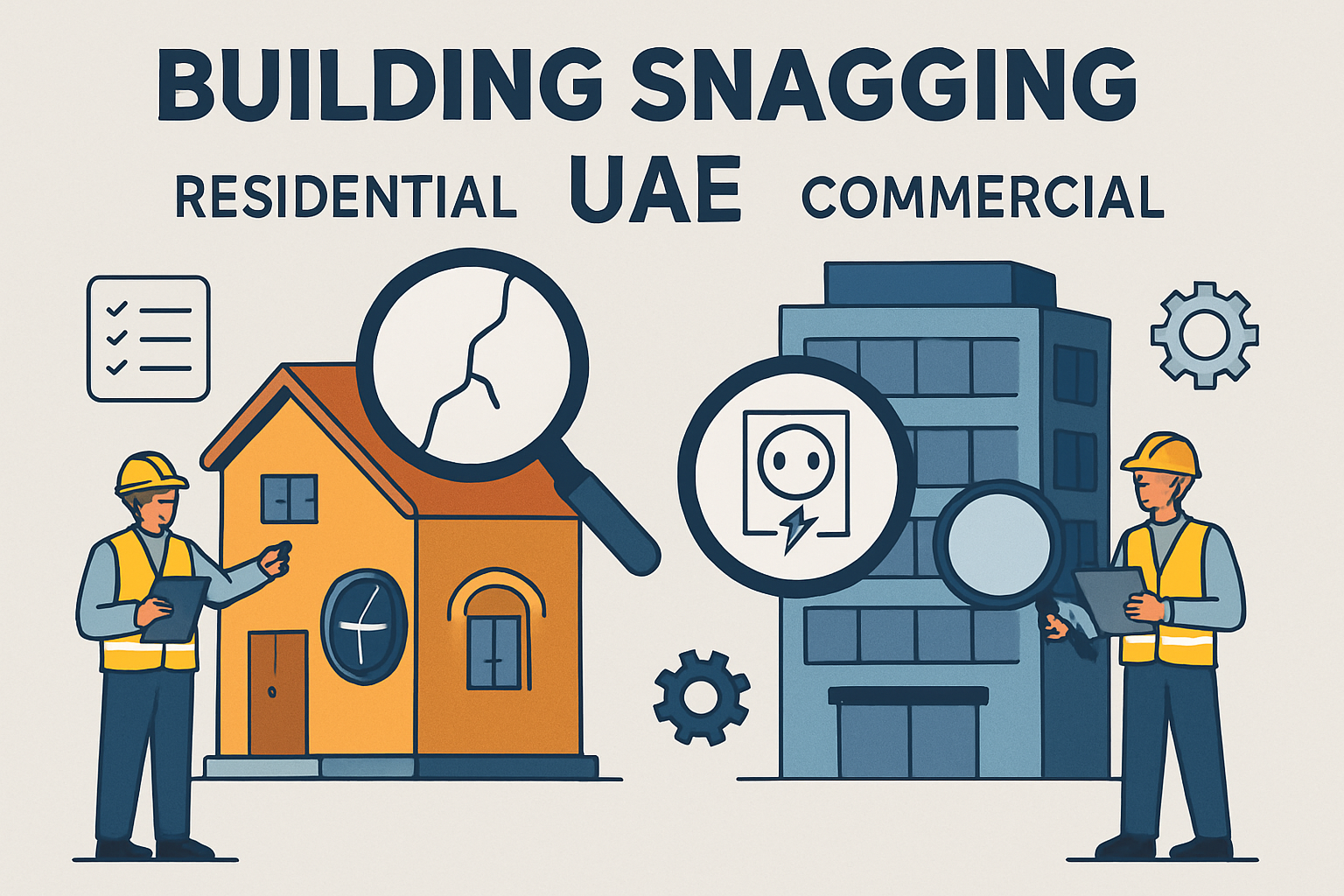
In the UAE’s fast-moving real estate and construction market, building snagging has become a critical step before handover and final acceptance. Whether it’s a luxury villa, high-rise apartment, retail unit, warehouse, or full commercial tower — snagging ensures quality, safety, and compliance.
Yet many property owners still misunderstand what building snagging actually involves.
This guide explains everything — clearly and professionally — for both residential and commercial projects.
What Is Building Snagging?
Building snagging is the systematic inspection of a property to identify construction defects, incomplete works, poor finishing, and compliance issues before final handover or during the Defects Liability Period (DLP).
It results in a detailed snag list — a professional report highlighting:
- Structural issues
- Finishing defects
- MEP (Mechanical, Electrical, Plumbing) faults
- Waterproofing concerns
- Compliance irregularities
Snagging protects owners, investors, tenants, and developers by ensuring the building meets agreed standards.
Why Building Snagging Is Essential in the UAE
Construction in the UAE moves quickly. Tight timelines and large-scale developments increase the risk of:
- Rushed finishing
- Hidden MEP defects
- Incomplete installations
- Poor workmanship
Without proper snagging:
- Rectifications become difficult after handover
- Maintenance costs increase
- Tenant disputes may arise
- Warranty claims may be delayed
Professional snagging ensures defects are documented before they become financial liabilities.
Residential Building Snagging
Residential snagging applies to:
- Apartments
- Villas
- Townhouses
- Residential towers
What Is Checked in Residential Snagging?
1. Civil & Finishing Works
- Wall cracks
- Uneven paint
- Hollow tiles
- Ceiling defects
- Poor silicone sealing
2. Plumbing
- Water pressure testing
- Drainage slope verification
- Leak detection
- Water heater installation
3. Electrical
- Socket polarity testing
- DB load balancing
- Lighting functionality
- AC power supply
4. HVAC (AC Systems)
- Airflow testing
- AC drainage slope
- Thermostat functionality
- Duct insulation
5. Waterproofing
- Balcony slopes
- Bathroom sealing
- Roof waterproofing (villas)
Residential snagging protects homeowners before moving in and during DLP.
Commercial Snagging
Commercial snagging is more complex and technical compared to residential inspections.
It applies to:
- Office spaces
- Retail units
- Warehouses
- Hotels
- Schools
- Clinics
- Full commercial towers
Key Differences in Commercial Snagging
Commercial projects require:
- Compliance with fire safety regulations
- Emergency lighting verification
- HVAC load testing
- Full MEP system evaluation
- Elevator inspections (where applicable)
- Fire alarm & sprinkler system checks
- Accessibility compliance
Because commercial properties involve public safety and business operations, snagging must be more detailed and technically documented.
Residential vs Commercial Snagging – Quick Comparison
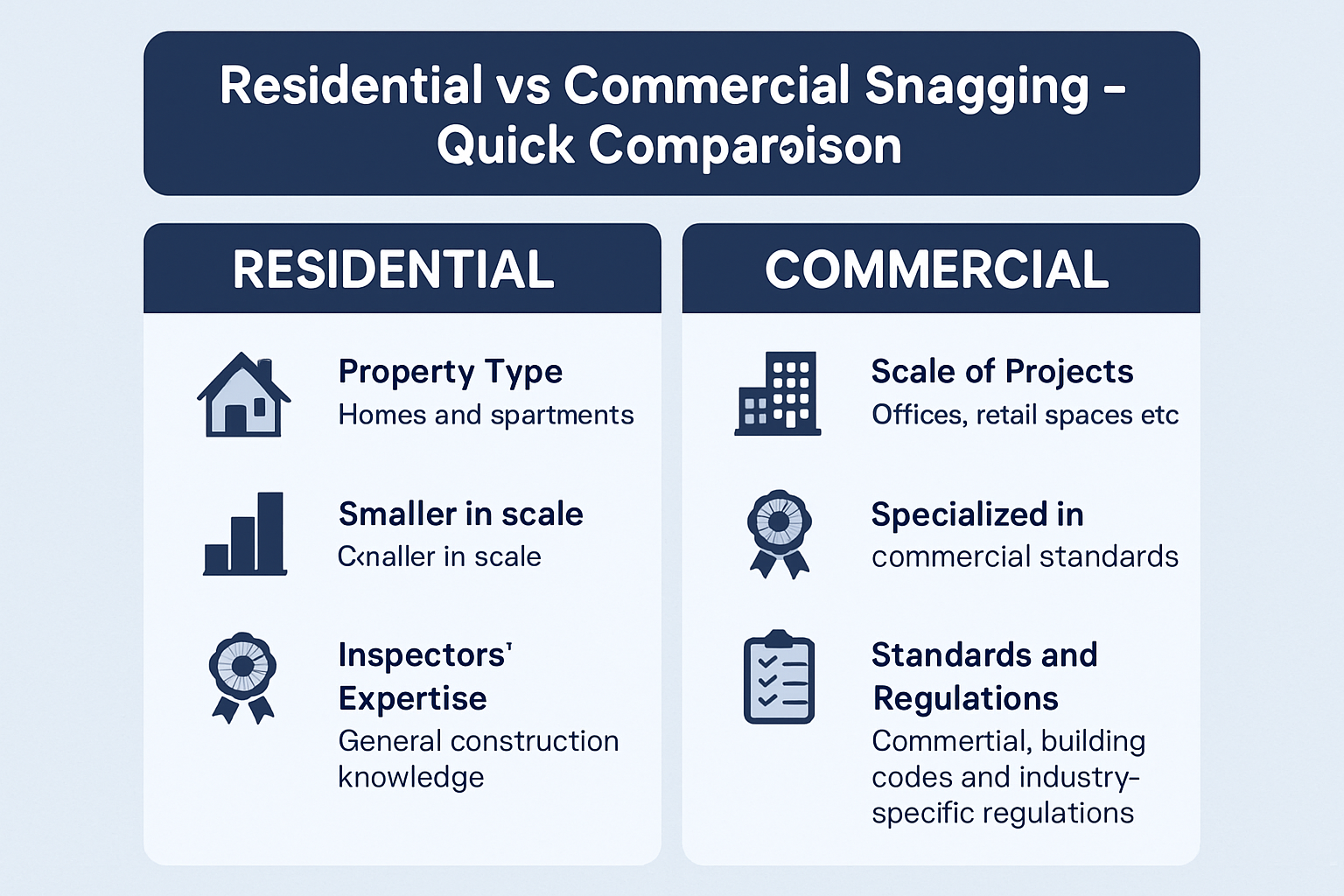
| Area | Residential Snagging | Commercial Snagging |
|---|---|---|
| Complexity | Moderate | High |
| Systems Involved | Basic MEP + Finishing | Advanced MEP + Fire & Compliance |
| Documentation | Detailed defect list | Technical compliance report |
| Risk Level | Investment protection | Business & safety protection |
| Scope | Unit-based | Multi-system building-wide |
When Should Building Snagging Be Done?
Building snagging is recommended:
- Before handover
- Before final payment
- After fit-out completion
- Before tenant occupancy
- Before DLP expiry
- After major renovation
For commercial projects, it is especially critical before leasing to tenants.
What Makes Professional Building Snagging Different?
A professional building snagging inspection includes:
✔ Systematic room-by-room evaluation
✔ Advanced tools (thermal imaging, moisture meters)
✔ MEP technical testing
✔ Photo-documented reports
✔ Clear defect categorization
✔ Rectification tracking support
It is not just a visual walk-through — it’s a technical quality audit.
Common Defects Found in Commercial Snagging
- Fire alarm panel misconfiguration
- Emergency exit signage not illuminated
- HVAC balancing issues
- Improper duct insulation
- Water leakage in service rooms
- Incorrect slope in drainage lines
- Incomplete ceiling access panels
- Loose electrical terminations
These issues can cause serious operational and legal risks if ignored.
The Cost of Skipping Building Snagging
Skipping professional snagging can lead to:
- Expensive post-handover repairs
- Delayed business openings
- Tenant complaints
- Legal disputes
- Warranty claim rejections
- Safety hazards
The cost of inspection is minor compared to long-term rectification expenses.
Final Thoughts
Whether you own a villa, apartment, office space, retail unit, or full commercial building — building snagging is a non-negotiable step in protecting your investment.
For residential properties, it ensures comfortable living.
For commercial properties, it protects operations, safety, and profitability.
Quality inspection today prevents costly repairs tomorrow.
If you’re planning a handover or nearing DLP expiry, professional snagging ensures your property meets the highest standards before acceptance.
