
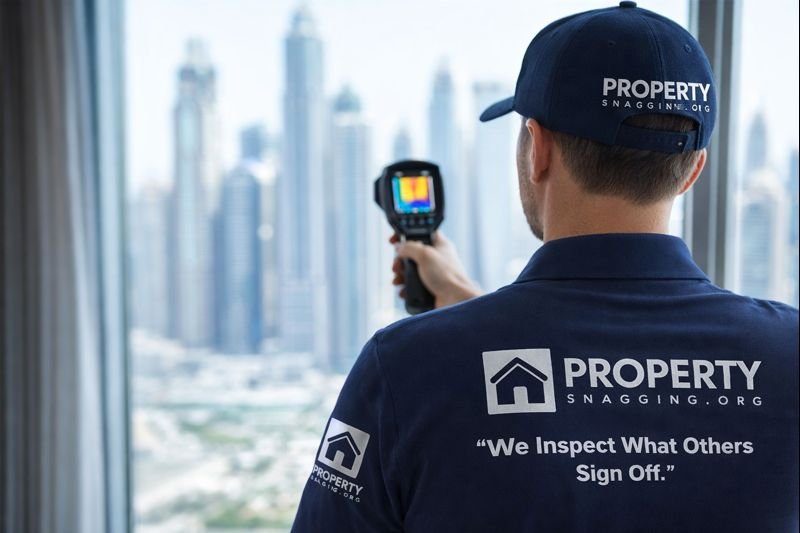
Choosing a RERA Certified Property Snagging Firm in Dubai: A Practical Guide
Dubai’s real estate market offers world-class developments, fast project delivery, and strong investment potential. However, speed and scale also introduce risk—especially at the handover stage, when buyers must decide whether a property truly meets promised standards.
Choosing the right property snagging company is not just about finding defects. It is about selecting a firm that understands regulation, construction quality, and buyer protection.
This practical guide explains how to choose a RERA-certified or RERA-aligned snagging firm in Dubai, what to look for, what to avoid, and how the right decision can protect your investment long after handover.
Why Choosing the Right Snagging Firm Matters
Not all snagging inspections are equal.
Two buyers may hire two different inspectors for the same building and receive very different outcomes:
One gets a cosmetic checklist
The other receives a compliance-backed technical report
The difference lies in experience, regulatory awareness, and inspection methodology.
A poorly chosen snagging firm may:
Miss critical defects
Fail to reference approvals
Produce weak reports
Leave buyers exposed to disputes
A well-chosen firm becomes your technical representative during one of the most important moments of ownership.
Understanding “RERA Certified” in Property Snagging
In Dubai, property regulation is overseen by the Real Estate Regulatory Agency (RERA), operating under the Dubai Land Department.
While RERA does not license snagging inspectors individually, a RERA-aligned snagging firm typically:
Operates under a valid Dubai trade license
Works within RERA-regulated developments
References approved drawings and compliance frameworks
Understands developer obligations and buyer rights
In practical terms, “RERA certified” means the company’s inspection process is aligned with Dubai’s regulatory environment, not based on personal opinion or informal standards.
Step 1: Verify Legal Registration & Trade Activity
The first filter is legality.
A legitimate snagging firm should:
Be registered in Dubai
Hold a valid trade license
Clearly list inspection-related activities
Operate transparently
Avoid:
Freelancers without trade licenses
Individuals operating on visit visas
Companies with unrelated business activities
Legal registration protects you if disputes arise.
Step 2: Confirm Experience in Dubai (Not Just Inspection Theory)
Dubai construction is unique.
Materials, climate conditions, waterproofing methods, AC systems, and finishing standards differ significantly from other countries.
Choose a firm with:
Proven experience in Dubai properties
Familiarity with local developers
Understanding of UAE building practices
Exposure to villas, apartments, and townhouses
Generic inspection experience is not enough—local expertise matters.
Step 3: Evaluate Inspection Scope (What Do They Actually Check?)
Many buyers assume all snagging inspections are comprehensive. They are not.
Ask for a clear scope of inspection, including:
Civil & Finishing
Walls, ceilings, floors
Tiles (alignment, hollowness)
Paint quality
Skirting and joints
Mechanical, Electrical & Plumbing (MEP)
Water pressure testing
Drainage slope
Electrical earthing
Socket polarity
AC cooling performance
Waterproofing & Moisture Risk
Bathrooms and wet areas
Balconies and terraces
Window sealing
AC drainage
Doors, Windows & Joinery
Alignment and operation
Locks and handles
Cabinet hinges
Glass sealing
Safety & Compliance
Smoke detectors
Fire stopping
Access panels
Safety clearances
If the firm cannot clearly explain its scope, that is a red flag.
Step 4: Ask About Inspection Methodology (How Do They Inspect?)
A professional snagging firm follows a systematic inspection process, not a casual walkthrough.
Look for:
Room-by-room inspection
Functional testing (not just visual checks)
Use of measuring tools
Photo documentation
Issue categorization (minor, major, critical)
Avoid firms that:
Rush inspections
Rely only on visual observation
Provide vague summaries
Methodology determines report quality.
Step 5: Review Sample Reports Before Hiring
A snagging report is only as strong as its clarity and evidence.
Request a sample report and evaluate:
Level of detail
Clear defect descriptions
Photo references
Location tagging
Professional formatting
A strong report:
Is easy to understand
Can be shared directly with the developer
Leaves little room for dispute
Weak reports often result in delayed or ignored rectifications.
Step 6: Ensure the Report Is Developer-Actionable
Developers respond best to:
Clear defect identification
Compliance-based observations
Structured snag lists
A RERA-aligned snagging firm writes reports that:
Reference approved layouts
Highlight deviations
Separate cosmetic from compliance issues
Support buyer claims objectively
This improves cooperation and reduces back-and-forth.
Step 7: Confirm Re-Inspection (De-Snagging) Support
Snagging does not end with the report.
Ask:
Do they offer re-inspection?
Do they verify rectifications?
Is closure confirmation provided?
Without re-inspection, buyers often:
Assume issues are fixed
Discover problems later
Lose leverage
A complete service includes inspection → rectification → verification.
Step 8: Understand Timing & Availability
Handover schedules are often tight.
Choose a firm that:
Can inspect within short notice
Aligns with developer timelines
Provides reports promptly
Delayed inspections reduce your ability to act before acceptance.
Step 9: Avoid Common Buyer Mistakes When Choosing a Firm
Mistake 1: Choosing Based on Price Alone
Low-cost inspections often mean:
Shorter inspection time
Limited scope
Generic reports
Mistake 2: Relying on Developer-Recommended Inspectors
These may lack independence.
Mistake 3: Skipping Snagging Because of DLP
DLP is not a substitute for pre-handover documentation.
Step 10: Understand the Value vs Cost Equation
Snagging is a one-time cost that protects:
Purchase value
Repair expenses
Legal position
Peace of mind
The cost of missed defects often exceeds the inspection fee many times over.
What a Good Snagging Firm Will Never Do
A professional firm will never:
Rush you to accept the unit
Downplay serious defects
Avoid documentation
Pressure you to skip re-inspection
Transparency is a sign of credibility.
Who Benefits Most From Professional Snagging?
First-time buyers
Overseas investors
Off-plan purchasers
Villa owners
Buyers unfamiliar with construction
In reality, every buyer benefits—experience does not eliminate risk.
The Role of Snagging in Long-Term Property Ownership
A well-snagged property:
Performs better over time
Requires fewer repairs
Avoids recurring issues
Maintains stronger resale value
Snagging is not just about handover—it sets the foundation for ownership.
Final Thoughts: Choose Expertise, Not Assumptions
Dubai’s property market rewards informed buyers.
Choosing the right RERA-aligned property snagging firm ensures:
Independent verification
Regulatory awareness
Strong documentation
Reduced risk
It is not about finding faults—it is about protecting your investment intelligently.
