
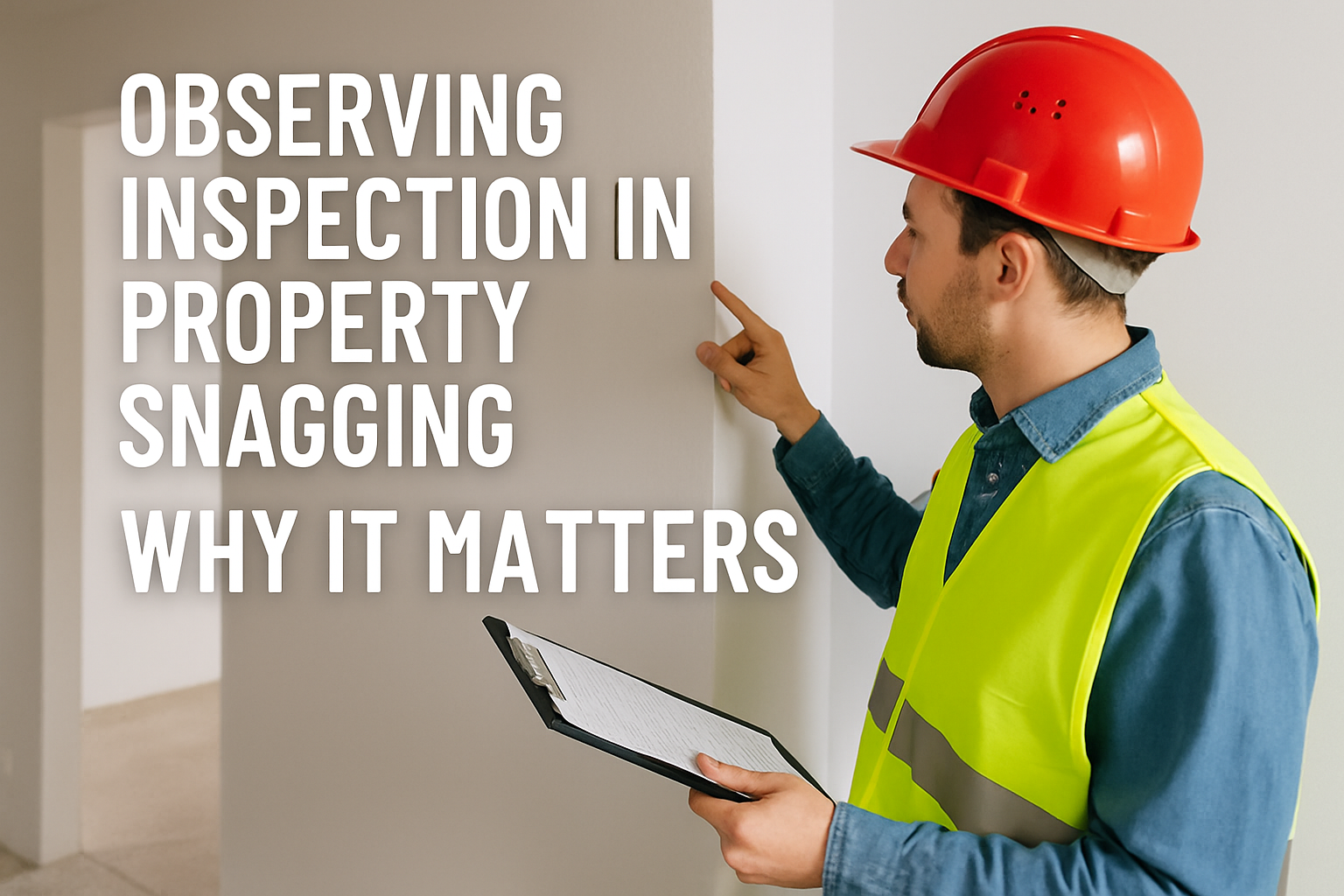
Observing Inspection in Property Snagging: Why It Matters Before Handover
Property snagging is an essential process for identifying defects and unfinished work in newly constructed properties. Whether it is a house, apartment, or commercial building, newly built properties can still contain construction mistakes, installation errors, or finishing defects.
One of the most important steps in the snagging process is observing inspection.
An observing inspection involves carefully examining a property to identify defects that may affect the quality, safety, or functionality of the building. This inspection allows professional snagging inspectors to detect problems before the property is officially handed over to the buyer.
For property buyers and investors, observing inspection helps ensure that their property meets acceptable construction standards and that developers fix defects before the handover is completed.
What Is Observing Inspection in Property Snagging?
Observing inspection refers to the process of visually evaluating a property to identify defects, poor workmanship, or installation problems.
During property snagging, inspectors carefully observe different components of the property including:
- Structural elements
- Interior finishing
- Mechanical systems
- Plumbing installations
- Electrical systems
- Doors and windows
This visual inspection is the foundation of the snagging process. Inspectors document every defect they observe and include these issues in a snag list, which developers must address before the property is delivered.
Why Observing Inspection Is Important Before Property Handover
Property buyers often assume that newly built homes are delivered without defects. However, construction projects involve many contractors and tight timelines, which can lead to mistakes or unfinished work.
A professional observing inspection helps ensure that the property meets acceptable quality standards before the buyer takes ownership.
Detect Construction Defects
Inspectors identify visible defects such as cracks, uneven surfaces, or installation problems that may affect the quality of the property.
Ensure Proper Installation of Systems
Observing inspection helps verify that plumbing, electrical, and HVAC systems are installed correctly.
Prevent Future Maintenance Problems
Detecting defects early allows developers to correct problems before the buyer moves in.
Protect Property Buyers
Professional inspections provide buyers with clear documentation of defects that need to be fixed before the property handover.
What Inspectors Check During Observing Inspection
During a snagging inspection, professionals carefully evaluate different parts of the property.
Structural Components
Inspectors examine structural elements such as:
- Walls and ceilings
- Floors and surfaces
- Columns and beams
Even minor cracks or surface defects may indicate construction issues.
Interior Finishing
Interior finishing defects are among the most common issues discovered during property inspections.
Inspectors check:
- Paint finishing quality
- Wall plaster smoothness
- Tile alignment and grout finishing
- Surface defects
Poor finishing work often occurs when construction projects are completed quickly.
Plumbing Installations
Plumbing systems must function correctly to prevent leaks and water damage.
Inspectors check:
- Sink and faucet installations
- Pipe connections
- Water pressure levels
- Drainage systems
Leaks and drainage problems are frequently discovered during observing inspections.
Electrical Systems
Electrical systems must meet safety standards to prevent hazards.
Inspectors evaluate:
- Electrical sockets
- Switch installations
- Lighting fixtures
- Circuit breakers
Electrical faults can pose serious safety risks if not detected early.
Doors and Windows
Proper installation of doors and windows is important for security and insulation.
Inspectors verify:
- Door alignment
- Window sealing
- Locking mechanisms
- Glass condition
Misaligned doors and windows are common defects in new properties.
Observing Inspection vs Basic Property Walkthrough
Many buyers perform a simple walkthrough before accepting a property. However, a walkthrough is not the same as a professional observing inspection.
A basic walkthrough may only identify obvious defects.
Professional inspectors, on the other hand:
- Conduct systematic inspections
- Use specialized tools
- Identify hidden defects
- Prepare detailed inspection reports
This makes professional snagging inspections far more effective.
Tools Used in Professional Observing Inspection
Professional snagging inspectors often use specialized tools to improve inspection accuracy.
These tools may include:
- Thermal imaging cameras for detecting moisture or insulation issues
- Moisture meters for water intrusion detection
- Laser levels for alignment measurement
- Electrical testers for wiring safety checks
- Pressure gauges for plumbing inspection
These tools help inspectors detect problems that may not be visible during a visual inspection.
Common Defects Found During Observing Inspection
Professional inspectors frequently discover multiple defects during property snagging inspections.
Some of the most common issues include:
Paint and Finishing Defects
Uneven paint, rough wall surfaces, and paint stains.
Tile Installation Problems
Loose tiles, cracked tiles, or poor grout finishing.
Door and Window Misalignment
Improper installation causing doors or windows to not close properly.
Plumbing Issues
Leaks, drainage problems, and low water pressure.
Electrical Faults
Faulty switches, loose sockets, or wiring problems.
Without professional snagging inspection, many of these defects may remain unnoticed.
The Role of Observing Inspection in Snagging Reports
After completing the observing inspection, inspectors compile their findings into a snagging report.
This report typically includes:
- A list of all identified defects
- Photographs documenting each issue
- Detailed descriptions of problems
- Recommendations for repairs
The snagging report is provided to the developer so that defects can be corrected before the final property handover.
Why Professional Snagging Inspectors Are Important
Although some buyers attempt to inspect properties themselves, professional snagging inspectors have the expertise required to identify hidden defects.
Professional inspectors provide:
- Technical construction knowledge
- Advanced inspection tools
- Detailed inspection reports
- Independent evaluation of property condition
Their expertise ensures that defects are properly documented and corrected.
Final Thoughts
Observing inspection is a critical step in the property snagging process. By carefully evaluating the condition of a property, inspectors can identify construction defects, installation mistakes, and finishing issues before property handover.
For property buyers, this inspection provides valuable protection and ensures that the property meets acceptable quality standards.
Conducting a professional observing inspection before accepting a property can help prevent costly repairs and long-term maintenance problems.
