
What Is Radon Snagging in Dubai?
Radon snagging is the process of identifying radon gas presence in a property and linking it to construction defects such as slab cracks, foundation gaps, or poor sealing. In Dubai, radon-related findings are treated as snagging issues when traced back to workmanship or building design faults.
Radon Snagging and Inspection in Dubai: A Hidden Risk in New Properties
When buyers receive handover of a new property in Dubai, most snagging attention goes to visible issues—cracks, leaks, electrical faults, poor finishing, or MEP defects. However, some of the most serious property risks are invisible, undetectable by sight or smell, and often ignored during basic snagging.
One of these hidden risks is radon gas.
Radon snagging and inspection in Dubai is an advanced, specialist aspect of property snagging that focuses on health-related construction defects linked to foundations, slabs, and building sealing. While radon is rarely discussed during handover, its presence can indicate serious workmanship and construction gaps that fall squarely under developer responsibility during DLP.
What Is Radon Gas?
Radon is a naturally occurring radioactive gas released from soil and rock beneath buildings. Outdoors, it disperses harmlessly. Indoors, especially in tightly sealed modern buildings, radon can accumulate to unsafe levels.
Why Radon Is Dangerous
- Colorless and odorless
- Cannot be detected without equipment
- Long-term exposure linked to lung cancer
- Affects smokers and non-smokers alike
Radon is considered one of the leading indoor environmental health risks worldwide.
Does Radon Exist in Dubai?
Yes. Radon exists globally, including in the UAE.
Dubai is not classified as a high-radon zone, but localized conditions—such as soil composition, reclaimed land, and construction methods—can lead to elevated indoor radon levels.
In Dubai, radon risk is influenced more by:
- Construction quality
- Slab sealing methods
- Foundation detailing
- Ventilation design
Than by geography alone.
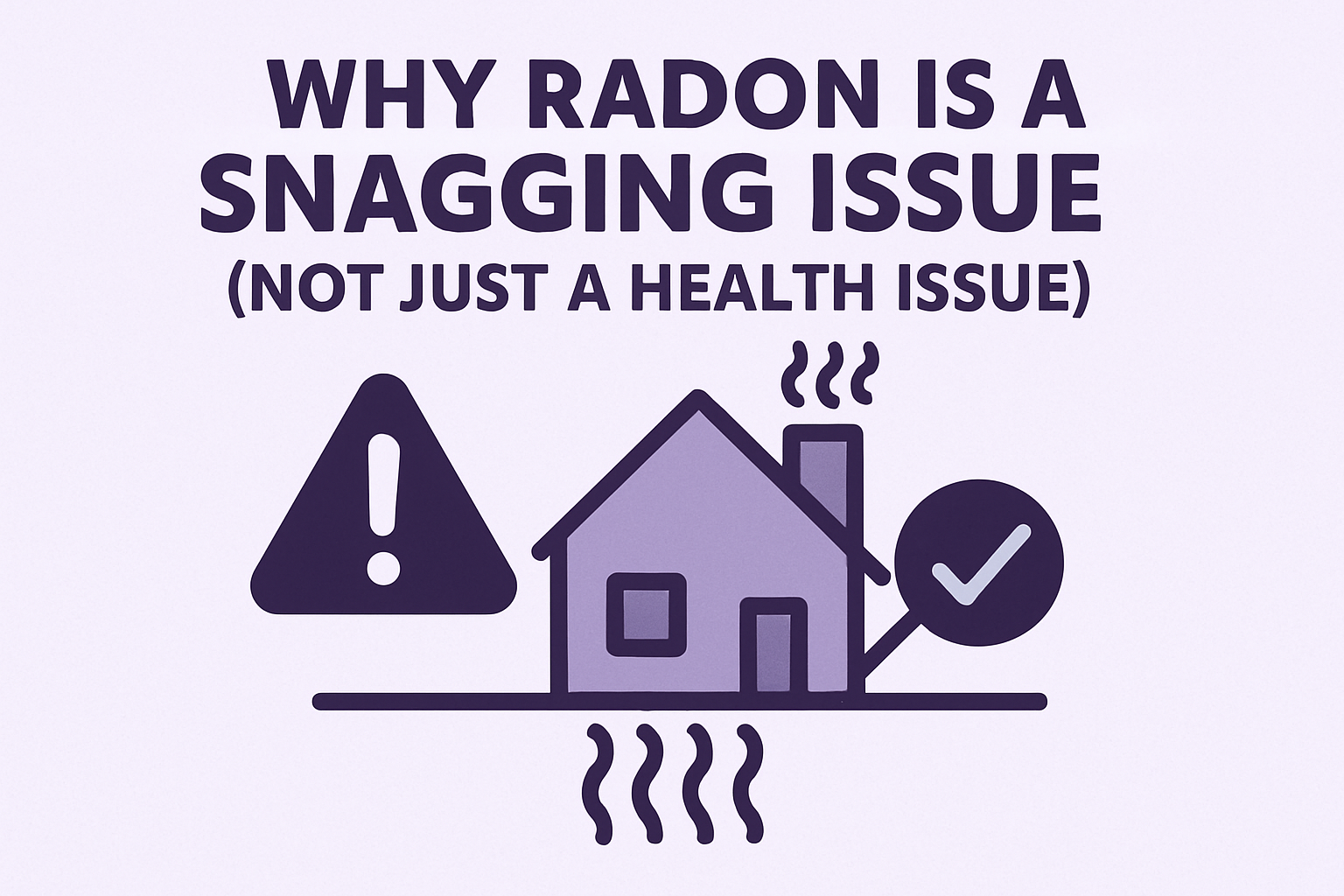
Why Radon Is a Snagging Issue (Not Just a Health Issue)
Radon does not randomly enter properties. It travels through construction-related pathways.
Common Radon Entry Points
- Cracks in concrete slabs
- Expansion joints
- Gaps around plumbing and service pipes
- Drainage penetrations
- Poorly sealed foundations
These are construction defects, making radon presence a legitimate snagging issue, especially during pre-handover and DLP inspections.
Properties in Dubai Most at Risk of Radon
Radon snagging is especially important for:
- Villas
- Townhouses
- Ground-floor apartments
- Properties with basements
- Homes built on filled or reclaimed land
New, airtight properties are often more vulnerable, as sealed environments trap gases more efficiently.
Why Standard Snagging Often Misses Radon
Traditional snagging focuses on:
- Visual defects
- Mechanical functionality
- Finishing quality
Radon requires:
- Specialized detection equipment
- Time-based measurement
- Understanding of gas migration and building science
Without targeted radon inspection, this risk goes completely undocumented.
Radon Snagging During the DLP Period in Dubai
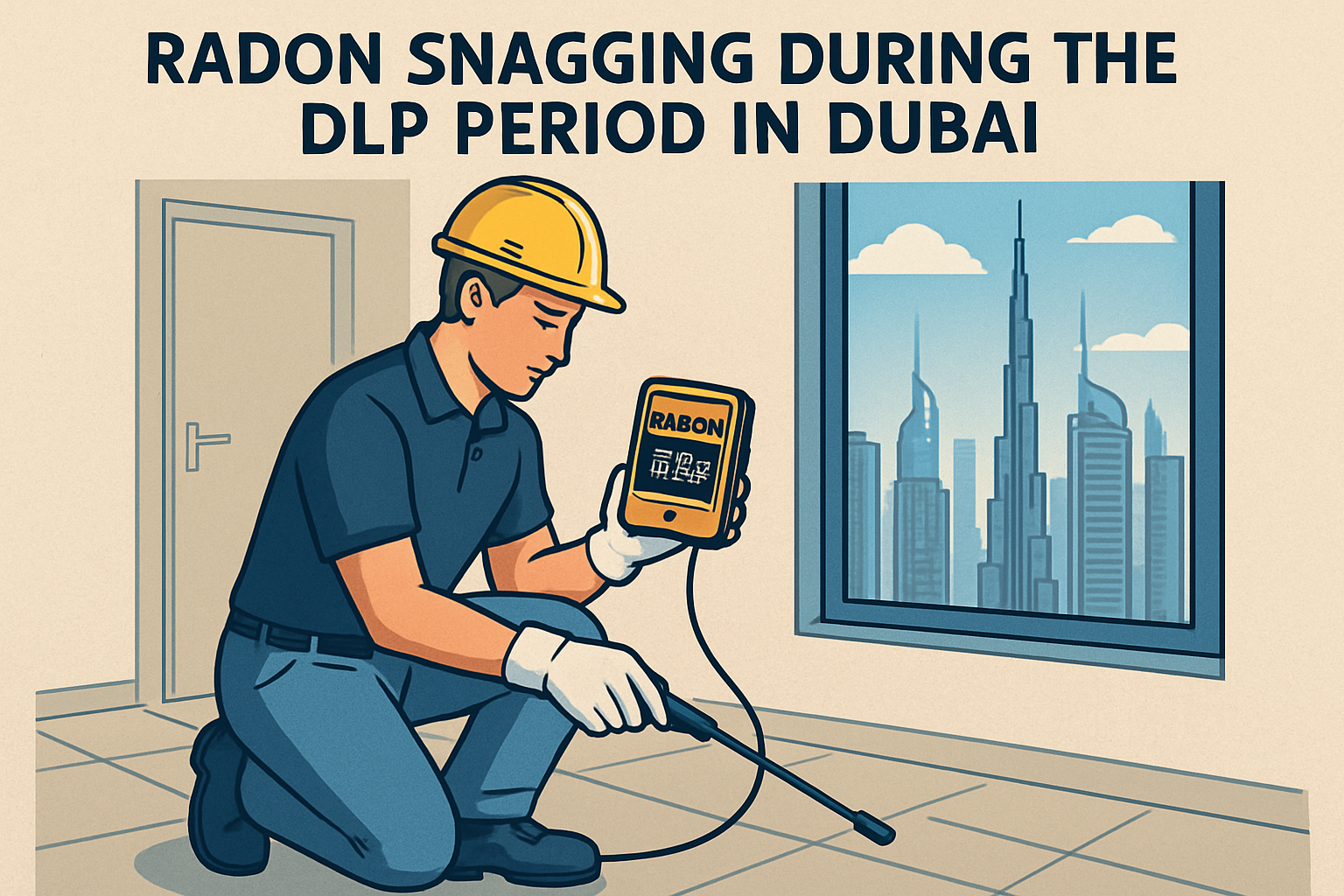
Why Timing Matters
The Defects Liability Period (DLP) is the strongest legal protection window for property owners after handover.
Radon-related defects usually originate from:
- Poor slab preparation
- Missing or failed vapor barriers
- Improper sealing around services
- Foundation workmanship issues
When identified during DLP:
- Responsibility lies with the developer
- Rectification can be demanded
- Long-term health and repair costs are avoided
After DLP expiry, the same issue becomes owner-funded.
How Professional Radon Snagging Is Conducted
Radon snagging is a structured, evidence-based process.
Step-by-Step Radon Snagging Process
- Property risk profiling (type, level, usage)
- Placement of calibrated radon detection devices
- Measurement over required exposure duration
- Data analysis against accepted thresholds
- Identification of construction-related entry points
- Classification of findings as snagging defects
- Clear developer-ready snag report
This ensures radon findings are actionable, not just informative.
What Happens If Radon Is Detected?
Detection does not mean the property is unsafe forever.
Typical Rectification Measures
- Sealing slab cracks and joints
- Improving under-slab ventilation
- Enhancing air circulation
- Installing mitigation systems if required
When addressed early, solutions are effective and cost-efficient.
Common Misconceptions About Radon in Dubai
“Radon doesn’t exist in Dubai.”
Radon exists worldwide and depends on construction quality.
“New homes are safe.”
New airtight buildings can trap radon more easily.
“Snagging only covers visible defects.”
Professional snagging covers hidden construction risks.
“Health issues aren’t snagging issues.”
Construction-related health risks are valid snags.
Why Radon Snagging Matters Before You Move In
Radon exposure is silent and long-term. You won’t know it’s there unless you test for it.
Radon snagging protects:
- Occupant health
- Children and elderly residents
- Legal rights during DLP
- Long-term property value
Skipping radon inspection means accepting unknown risk.
Final Thoughts: Radon Is Invisible, But the Liability Is Real
Property snagging is meant to uncover all defects—not just cosmetic ones.
Radon presence points to deeper construction issues that should be identified before final acceptance or DLP expiry. Including radon snagging in your Dubai property handover is not excessive—it is responsible, informed ownership.
