
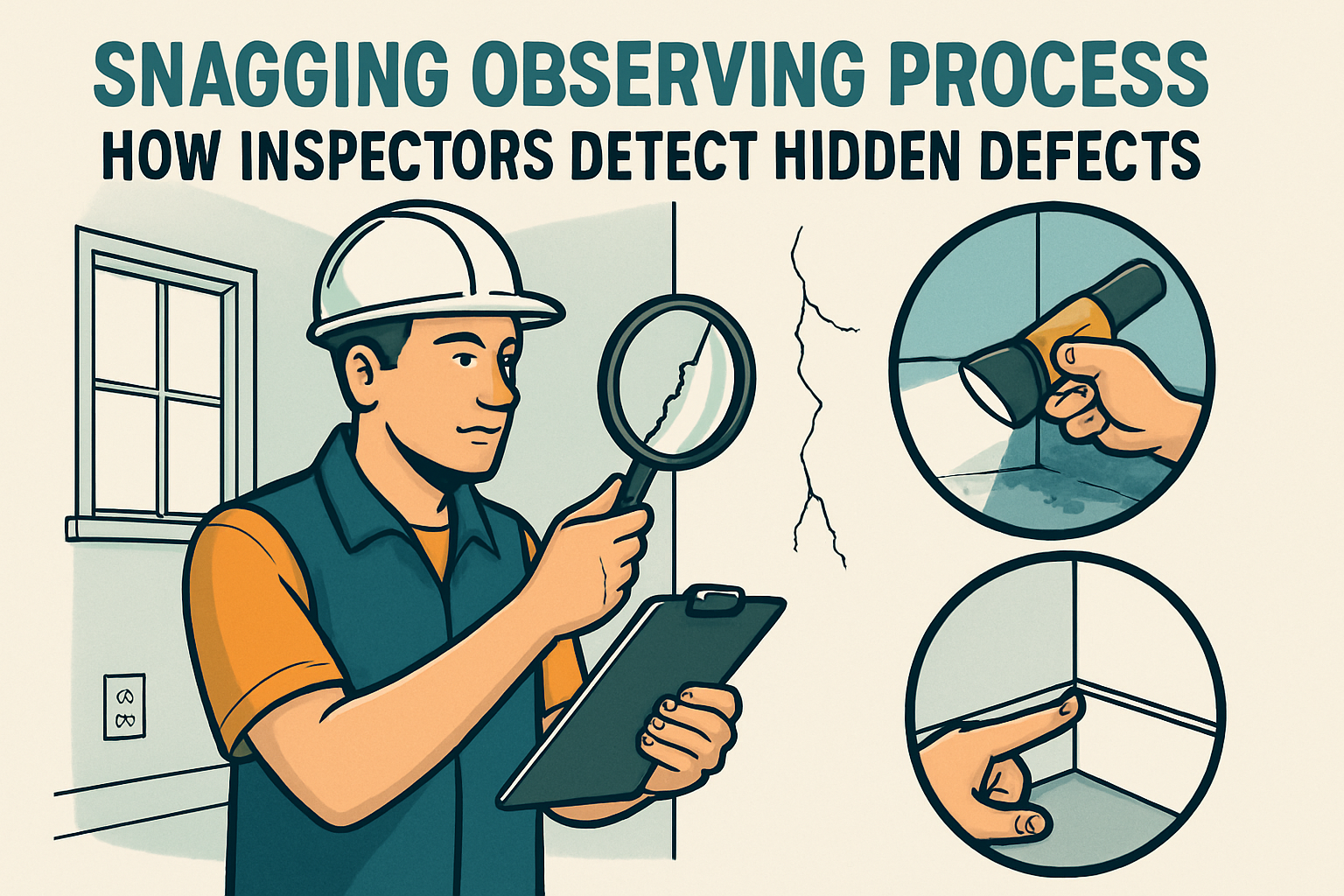
Snagging Observing Process: How Inspectors Detect Hidden Property Defects
When buying a newly built property, many homeowners expect the building to be delivered in perfect condition. However, construction projects involve complex processes, multiple contractors, and tight timelines. Because of this, newly constructed properties often contain defects that may not be visible during a simple walkthrough.
This is why property snagging inspections are essential before property handover.
One of the most important parts of this process is snagging observing, where professional inspectors carefully examine the property to identify construction defects, installation problems, and finishing issues.
The snagging observing process helps inspectors detect hidden defects early so developers can correct them before the property is delivered to the buyer.
What Is the Snagging Observing Process?
The snagging observing process is a systematic inspection method used by professional inspectors to identify defects in newly constructed properties.
During this process, inspectors observe and evaluate different elements of the property including:
- Structural components
- Interior finishing
- Plumbing systems
- Electrical installations
- HVAC systems
- Doors and windows
The goal of the process is to identify all defects and create a detailed snagging report listing issues that require correction.
Why Snagging Observing Is Important
Property buyers often rely on developers to deliver defect-free homes. However, even high-quality developments can contain installation errors or finishing problems.
The snagging observing process helps:
Identify Construction Defects
Inspectors detect visible issues such as cracks, poor finishing, or installation errors.
Detect Hidden Problems
Some defects are not obvious during a basic walkthrough and require careful observation.
Protect Property Buyers
Professional inspections ensure developers correct defects before handover.
Ensure Quality Construction Standards
The inspection confirms that the property meets acceptable construction quality standards.
Step-by-Step Snagging Observing Process
Professional snagging inspections follow a structured process to ensure every part of the property is carefully evaluated.
Step 1: Initial Property Walkthrough
The inspection begins with a general walkthrough of the property.
Inspectors observe:
- Overall construction quality
- Surface finishing
- Visible defects
This step helps inspectors identify areas that require closer examination.
Step 2: Detailed Visual Inspection
During the next stage, inspectors perform a detailed visual inspection of all property components.
Inspectors carefully examine:
Walls and Ceilings
Checking for cracks, uneven surfaces, or poor plaster finishing.
Flooring and Tiles
Inspecting tile alignment, cracks, and hollow tiles.
Doors and Windows
Testing door alignment, window sealing, and locking mechanisms.
Interior Finishing
Evaluating paint finishing, surface smoothness, and installation quality.
This stage helps inspectors detect most visible defects.
Step 3: System Inspection
In addition to visual observation, inspectors evaluate the functionality of installed systems.
Plumbing System Checks
Inspectors verify:
- Water pressure levels
- Pipe connections
- Drainage systems
- Leakage around fixtures
Electrical System Checks
Inspectors test:
- Electrical sockets and switches
- Lighting fixtures
- Circuit breakers
HVAC System Checks
Inspectors examine:
- Airflow from vents
- Thermostat functionality
- Condensation drainage
- AC insulation
These tests ensure that systems operate correctly.
Step 4: Using Inspection Tools
Professional inspectors often use specialized tools to detect hidden defects.
Common tools include:
- Thermal imaging cameras for moisture detection
- Moisture meters for identifying water intrusion
- Laser levels for measuring surface alignment
- Electrical testers for wiring safety checks
- Pressure gauges for plumbing evaluation
These tools help inspectors detect issues that may not be visible during visual inspection.
Step 5: Defect Documentation
Once defects are identified, inspectors carefully document them.
Each defect is recorded with:
- Description of the issue
- Location within the property
- Photographic evidence
This documentation ensures developers clearly understand the issues that require correction.
Step 6: Snag List Preparation
All observed defects are compiled into a snag list, which is a structured list of issues that must be addressed before handover.
The snag list helps developers identify problems and organize repairs.
Step 7: Snagging Report Creation
After completing the inspection, inspectors prepare a professional snagging report.
The report typically includes:
- Detailed defect descriptions
- Photographs of each issue
- Location references within the property
- Recommendations for repairs
This report provides buyers with a clear overview of the property’s condition.
Common Defects Found During Snagging Observing
Professional inspectors frequently discover multiple defects during property snagging inspections.
Some common issues include:
Paint and Finishing Problems
Uneven paint, stains, and rough surfaces.
Tile Installation Defects
Cracked tiles, hollow tiles, or poor grout finishing.
Door and Window Issues
Improper alignment and sealing problems.
Plumbing Defects
Leaks, drainage problems, and low water pressure.
Electrical Faults
Loose sockets, faulty switches, or wiring problems.
Identifying these issues early helps ensure they are corrected before the buyer moves in.
Why Professional Snagging Inspectors Are Recommended
While buyers may perform basic walkthroughs, professional inspectors have the expertise required to detect hidden defects.
Professional inspectors provide:
- Technical construction knowledge
- Advanced inspection tools
- Detailed snagging reports
- Independent property evaluation
Their expertise ensures the snagging process is thorough and accurate.
Final Thoughts
The snagging observing process plays a critical role in identifying property defects before handover. By carefully examining structural elements, finishing quality, and installed systems, inspectors can detect problems that buyers may not notice.
Professional snagging inspections help ensure that developers correct defects before the property is delivered.
For property buyers, conducting a proper snagging inspection provides peace of mind and protects their investment.
