
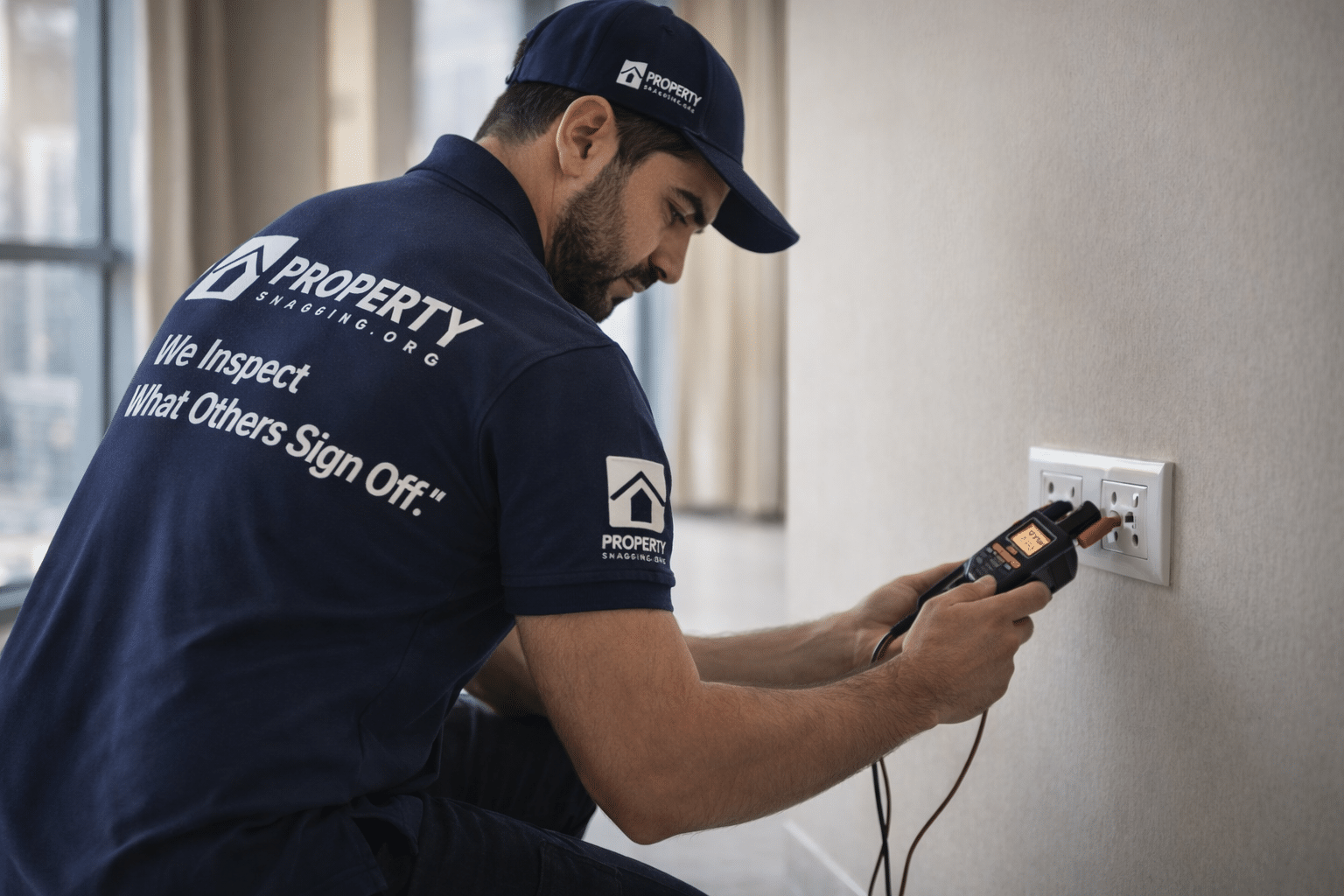
Why a Large Team of Certified Engineers Improves Property Inspection Accuracy
Property snagging is not just about identifying visible defects—it is about understanding how a building functions as a complete system. In the UAE’s fast-paced construction environment, inspection accuracy depends heavily on who performs the inspection and how it is carried out.
This is why property inspections conducted by a large team of certified engineers consistently deliver more reliable, accurate, and defensible results than inspections performed by individual or non-technical inspectors.
The Difference Between Inspectors and Certified Engineers
Not all property inspectors have engineering backgrounds. Many inspections rely on visual observations only, which can miss deeper construction, MEP, and performance-related defects.
Certified engineers, on the other hand, bring:
Structural knowledge
Mechanical and electrical understanding
System-based analysis
Root-cause defect identification
Technical reporting capability
This distinction is critical in the UAE, where buildings often involve complex design, high-rise systems, and multiple subcontractors.
Why Team Size Matters in Property Inspections
A large certified engineering team is not about volume alone—it is about consistency, coverage, and specialization.
When inspections are handled by a team rather than individuals, buyers benefit from:
Multiple layers of defect verification
Specialized expertise (structural, electrical, HVAC)
Reduced risk of missed issues
Standardized inspection checklists
Uniform reporting quality
This team-based approach dramatically improves inspection accuracy, especially in large or high-value properties.
Complex UAE Properties Require Engineering-Led Inspections
Properties in the UAE often include:
Centralized HVAC systems
Advanced electrical infrastructure
Integrated plumbing and drainage networks
Waterproofing systems exposed to extreme climate conditions
High-end finishes with strict tolerance requirements
Certified engineers are trained to evaluate system performance, not just appearance—making them far more effective during snagging inspections.
The Role of Engineering Judgment in Defect Identification
Many property defects are symptoms, not causes.
For example:
Paint bubbling may indicate waterproofing failure
Tile cracks may signal substrate movement
AC inefficiency may point to duct leakage or poor insulation
Electrical issues may relate to load imbalance or grounding faults
Certified engineers identify the root cause, ensuring defects are reported accurately and rectified properly.
Regulatory and Certification Alignment
Engineering-led inspection teams are better equipped to align with:
UAE regulatory frameworks such as RERA
International inspection standards set by InterNACHI
This alignment ensures reports are:
Developer-ready
Technically defensible
Structured for faster resolution
Suitable for handover and DLP claims
How Large Engineering Teams Improve Speed Without Sacrificing Quality
One of the biggest misconceptions is that speed reduces quality. In reality, large certified teams improve both.
Benefits include:
Faster scheduling
Parallel inspections for large units or portfolios
Quick escalation of critical issues
Faster report preparation
Consistent turnaround times
This is especially valuable for investors, developers, and buyers managing multiple properties.
Advanced Tools Are Only Effective in Skilled Hands
While tools like thermal imaging and moisture meters are important, their effectiveness depends on the operator’s expertise.
Certified engineers know:
Where to test
How to interpret data
When readings indicate serious defects
How to document findings correctly
Without engineering knowledge, advanced tools often produce misleading or incomplete results.
Reduced Risk of Missed or Misclassified Defects
Inspections conducted by non-engineers often suffer from:
Overlooked technical issues
Incorrect defect severity ratings
Poor prioritization
Incomplete reporting
Engineering-led teams significantly reduce these risks by applying structured inspection logic and technical validation.
Who Benefits Most from Engineering-Led Inspections?
✔ Property buyers
✔ Investors with multiple units
✔ Developers
✔ Commercial property owners
✔ Asset managers
For high-value assets, engineering accuracy is not optional—it is essential.
Also Read Rain Damage in Dubai Homes (2026): Snagging & Claims
Final Thoughts: Accuracy Comes from Expertise and Scale
Property inspection accuracy is not achieved by chance. It is the result of:
Certified engineering expertise
Team-based inspection systems
Advanced tools
Standardized reporting
Proven inspection experience
A large team of certified engineers delivers inspections that are more accurate, more reliable, and far more effective in protecting property investments.
Book an engineering-led property snagging inspection and ensure no defect is missed.
