
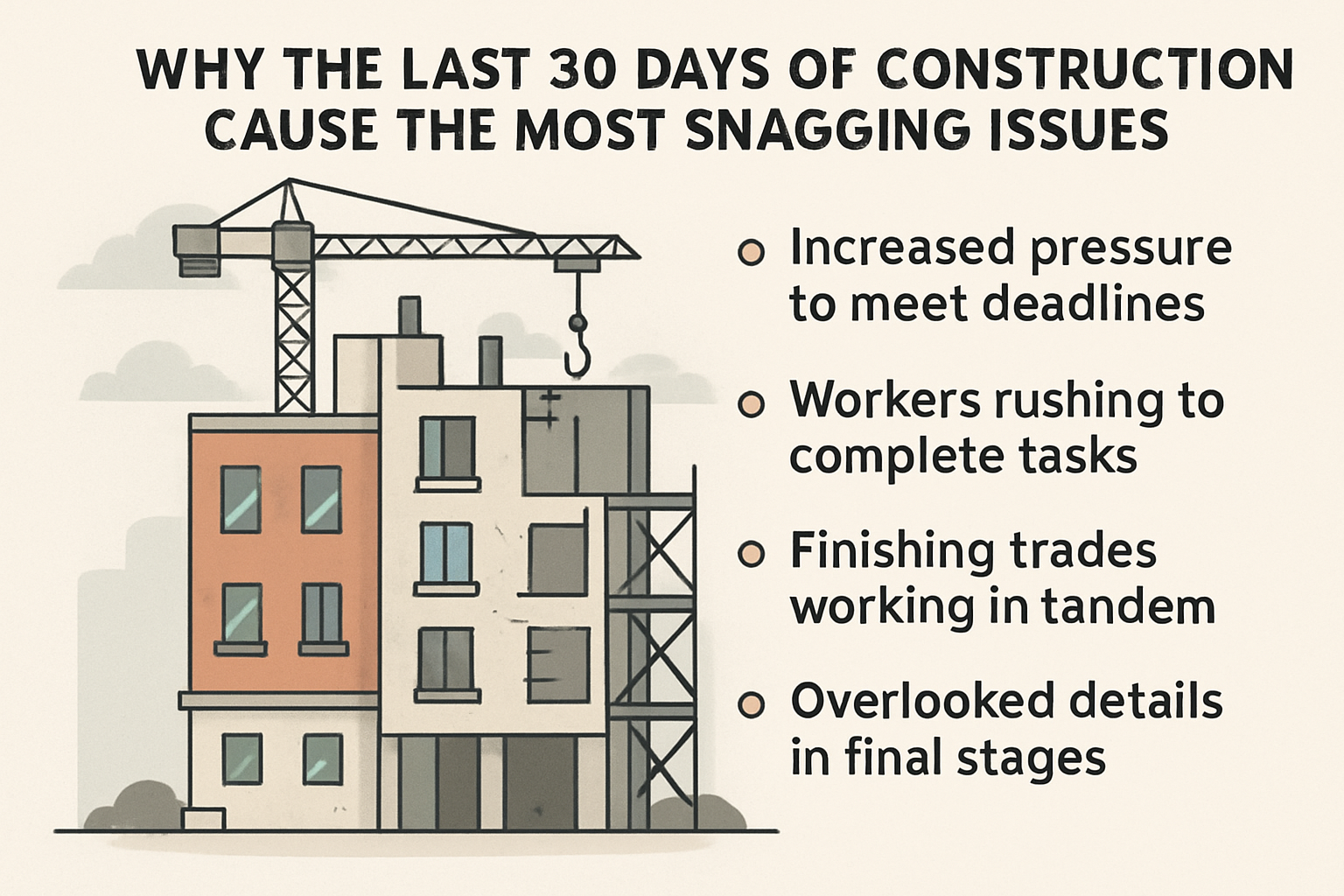
Why the Last 30 Days of Construction Cause the Most Snagging Issues
In Dubai, most property owners assume construction defects happen because of poor materials or bad design.
In reality, the largest number of snagging issues are created in the final 30 days before handover — when projects are rushed, quality control breaks down, and cosmetic completion is prioritized over technical accuracy.
This critical final phase is where small shortcuts turn into long-term defects, many of which only surface after move-in.
This article explains why the last 30 days are the most dangerous period for quality, what typically goes wrong, and why professional snagging inspections are essential before handover.
The Reality of the Final Construction Phase in Dubai
The last 30 days before handover are not about building — they are about finishing, closing, and delivering.
During this period:
- Developers are under pressure to meet handover dates
- Contractors rush to close pending items
- Multiple trades work simultaneously in the same spaces
- Inspections focus on appearance, not performance
Quality control becomes secondary to speed.
1. Multiple Trades Working at the Same Time
In the final month, villas and apartments often have:
- Electricians
- Plumbers
- AC technicians
- Painters
- Tile installers
- Joinery teams
…all working in parallel, often in the same room.
This leads to:
- Damaged finishes after completion
- Waterproofing layers punctured by later works
- Loose electrical connections after false ceiling closure
- Poor sealing around fittings installed last
These conflicts are a major source of hidden snagging issues.
2. Waterproofing Is Rushed or Covered Too Quickly
Waterproofing defects are among the most common snags created in the final phase.
Typical last-minute issues include:
- Membranes not fully cured
- Corners and joints rushed or skipped
- Protection layers damaged before tiling
- Wet areas covered without proper testing
Once tiles, screed, or paint are applied, these defects become invisible — until leaks appear months later.
3. Incomplete Testing of MEP Systems
During the final 30 days:
- Electrical systems may be energized late
- Plumbing is tested briefly, not under real load
- AC systems are switched on but not balanced
As a result:
- AC cools unevenly
- Water pressure issues go unnoticed
- Drainage problems are missed
- Electrical safety defects remain hidden
Systems appear functional — but not correctly commissioned.
4. Cosmetic Fixes Hide Deeper Defects
To meet handover deadlines, cosmetic corrections are prioritized.
This includes:
- Painting over cracks instead of repairing them
- Silicone applied to hide poor alignment
- Touch-ups masking water stains
- Tiles replaced without fixing hollow substrate
These fixes are designed to pass visual inspection, not long-term use.
5. Final Inspections Focus on Appearance, Not Performance
Internal inspections before handover often focus on:
- Cleanliness
- Surface finishes
- Visible damage
They rarely test:
- Moisture behind walls
- Thermal performance
- Electrical polarity and earthing
- Drainage flow under sustained use
This gap allows critical defects to pass unnoticed.
6. Documentation and Rectification Are Rushed
As handover approaches:
- Snag lists are shortened
- Items are closed without re-inspection
- Defects are marked “rectified” without verification
Buyers who rely only on developer snag lists often inherit unresolved issues.
7. Why These Issues Appear After Move-In
Many last-minute defects only surface when:
- The property is lived in daily
- AC runs continuously
- Water usage increases
- Materials expand under heat
This is why owners experience problems within weeks or months of handover, even in “brand new” homes.
The Cost of Missing Last-Minute Snags
Defects missed in the final 30 days often lead to:
- Post-handover repair costs
- Disputes during the DLP period
- Rejected defect claims due to poor documentation
- Disruption after moving in
Repairs that could have been fixed before handover at zero cost can later cost tens of thousands of dirhams.
Why Professional Snagging Is Critical Before Handover
A professional snagging inspection during this final phase:
- Identifies hidden and non-visual defects
- Tests systems under real conditions
- Verifies rectification, not just completion
- Documents issues for developer accountability
It acts as a final quality checkpoint before responsibility shifts to the owner.
Final Thoughts
The last 30 days of construction are not the safest — they are the most risky.
Rushed work, overlapping trades, skipped testing, and cosmetic shortcuts create the majority of snagging issues seen in new Dubai properties.
A professional snagging inspection during this period is not optional — it is the only reliable way to protect your investment before handover.
About PropertySnagging.org
We provide independent, professional snagging inspections designed to uncover defects others miss — helping buyers protect their property, their DLP rights, and their peace of mind.
