
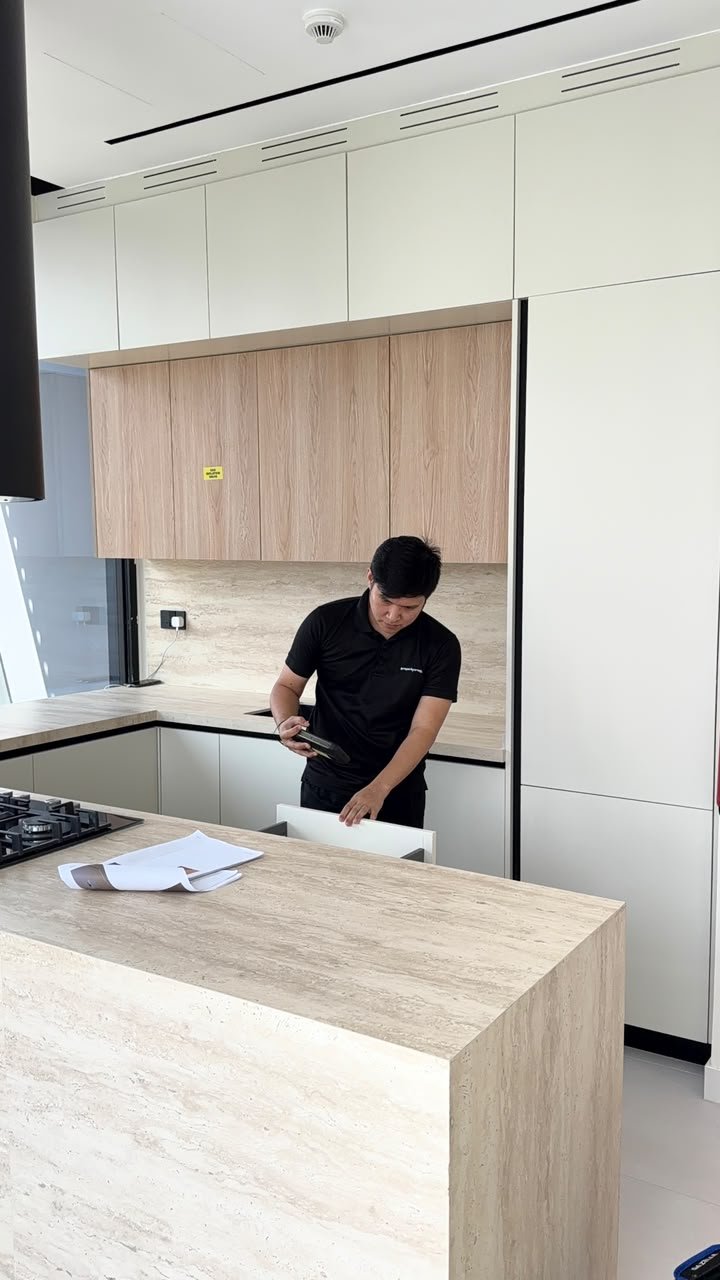
A repair marked “done” is not the same as a repair that works. Thus, that gap is where De snagging comes in. Most buyers in Dubai know that property snagging Dubai inspections exist. Far fewer know about the second visit. Snagging finds the defects. De snagging checks whether the developer fixed them properly, and whether the fix created new problems.
If you skip that step, you’re trusting a status update. A follow-up inspection lets you trust evidence instead.
What Is De snagging?
De snagging (also spelled De snagging) is a follow-up inspection after the developer’s repair work. Afterward, the inspector returns with your original snag list and checks each item one by one.
Additionally, view it as a second opinion on the repairs. The first inspection answers “what’s wrong?” Moreover, the second answers “is it fixed?”
It also looks for damage the repair crew caused. Additionally, a technician who replaces a cabinet hinge can chip the door edge. However, a painter who covers a stain can splash the floor. Those new marks are easy to miss unless someone checks for them.
Snagging vs. De snagging at a Glance
| Snagging | De snagging | |
| Purpose | Find and record defects | Verify the repairs |
| Starting point | The property itself | Your snag report |
| Output | A full defect list | A status for every item: fixed, partly fixed or still open |
| Timing | Before handover, or during the Defect Liability Period | After the developer says repairs are complete |
Why the “Re-Snag Loop” Catches Buyers Out
Moreover, here’s a pattern worth knowing. Following that, you report 80 defects. However, the developer fixes most of them and reports the job complete. You collect the keys, move in and find that 12 items are still wrong. By then you have less leverage and more hassle.
We call this the re-snag loop: report, repair, discover, report again. De snagging cuts it short. You find the unfinished items while the developer still has reasons to finish them.
Five Ways Repairs Quietly Fail
Repairs fail in predictable ways. Know them, and you’ll know where to look.
- Cosmetic cover-ups. Someone paints over a stain without fixing the cause. The mark returns, often within weeks. Look for fresh paint on a wall that had a damp patch.
- Surface fixes on deeper problems. Re-grouting a bathroom floor won’t cure a drainage fall that runs the wrong way. Test the drain again with water.
- Mismatched finishes. A replaced tile, a repainted patch or a new door handle may not match what’s around it. It’s a small defect, but you’ll see it every day.
- Adjustments that don’t hold. A window that closes during the repair visit can drift again after a few days of use. Operate it several times.
- New damage from the work itself. Scuffs, scratches, dust in sealant and dirty fingerprints on fresh paint all count as new snags.
What to Check on a De snagging Visit
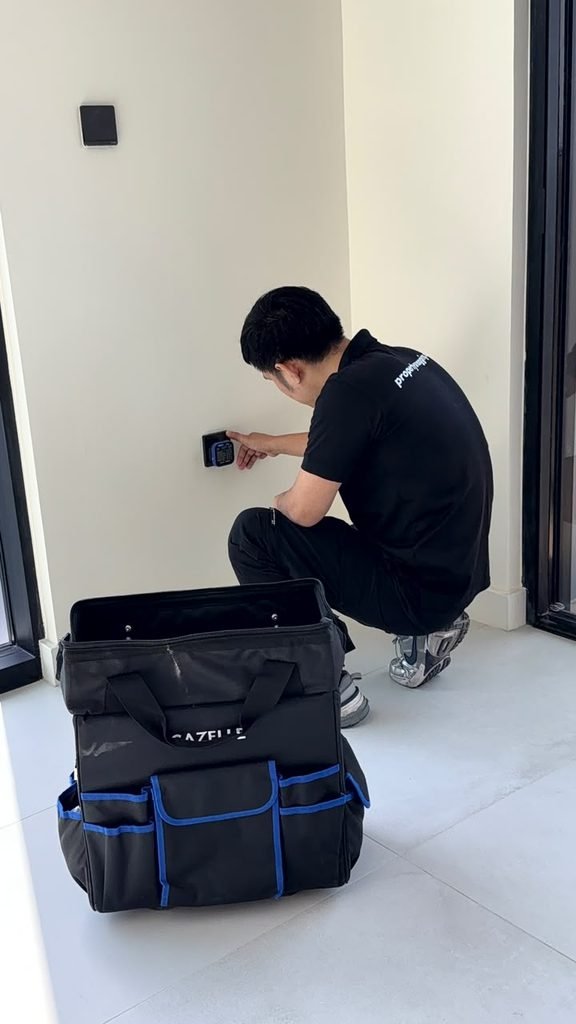
Work from the original report. Don’t start from scratch.
Walls and ceilings. Compare each repaired patch with the surface around it. Check for a visible edge, a different sheen or a stain that has reappeared. Where a ceiling stain was reported, look closely for fresh moisture signs.
Floors and tiles. Tap replaced tiles and listen for hollow sounds. Check that they sit level with their neighbors and that the grout is complete and even.
Doors, windows and cabinets. Open and close each reported item several times. A door that rubbed the frame should swing freely now. Drawers and cabinet doors should line up and close properly.
Plumbing and bathrooms. Run the water. Watch the drain and check visible connections. Inspect the sealant for gaps. If the original problem involved drainage or waterproofing, a visual check alone may not be enough to call it solved.
AC. Switch it on and let it run. Check airflow, listen for unusual noises and look for moisture around accessible equipment.
New damage. Scan every room again, not just the reported spots.
A Simple Method for Verifying Each Snag
Whether you hire someone or do it yourself, use the same routine for every item:
- Find the original entry and its photo.
- Stand where the first photo was taken.
- Take a new photo from the same position.
- Test the function if there is one (open it, run it, switch it on).
- Mark it Fixed, Partly fixed or Still open.
Matching the photo angle makes before-and-after comparisons hard to dispute. Developers find it difficult to argue with two photos of the same spot.
How Snagging Tools Help
Your eyes do most of the work, but some snagging tools add useful information.
- Moisture meter: flags damp areas that fresh paint may be hiding.
- Thermal imaging camera: shows temperature patterns that can point to moisture or cooling problems.
- Level and tape measure: check alignment and surface differences.
- Torch: shows poor finishing and gaps in dim corners.
- Camera: records proof for every item.
One caution. A tool reading is a clue, not a diagnosis. A moisture meter can tell you where to look. It can’t tell you why the moisture is there. A good inspector explains that limit in the report.
Does De snagging Apply to Villas?
Yes. Villa snagging follows the same logic, with more ground to cover. Alongside the interior, a villa follow-up may include driveways, boundary walls, terraces, balconies, accessible roof areas and visible drainage points. Check the exterior items from your original report first. Water pooling, cracked rendering and uneven paving often need a second repair attempt.
Apartments have fewer exterior items, but they have the same internal systems. Both property types need the follow-up.
De snagging and the Defect Liability Period
The defect liability period (Defect Liability Period) is the window after handover in which the developer may be responsible for certain defects. Check your contract for the exact length, start date and exclusions.
De snagging fits inside that window. Here’s a sensible order:
- Before handover: snag the property and send the report.
- After repairs: de snag, and record what’s still open.
- During the Defect Liability Period: inspect again for problems that only appear with use, like AC performance or slow leaks.
- Before the Defect Liability Period ends: submit remaining items with time to spare.
Don’t wait for the last week. Developers need time to respond, and you need time to follow up.
When to Book Your De snagging Visit
Book it after the developer confirms the repairs are finished. If you go earlier, the inspector will find half-done work and you’ll pay for another visit.
Before you book, have these ready:
- Your original snag report and photos
- The developer’s list of completed repairs, if they sent one
- Confirmation that you can access the property
- A note of any repairs that needed a specialist, like waterproofing or electrical work
What to Do When a Repair Failed
Stay factual and keep it in writing.
- Quote the original snag number or description.
- Attach a new photo showing the current condition.
- State plainly what’s still wrong.
- Report new damage as a separate item, so it isn’t confused with the original issue.
- Keep copies of everything, with dates.
If the problem involves safety, water or electrics, ask a qualified specialist to assess it. A visual inspection can’t settle those questions.
Also remember that a report doesn’t guarantee a repair. The developer reviews each item under your contract and warranty terms.
How to Choose a Snagging Company in Dubai
Not every snagging company Dubai buyers find will offer a follow-up visit. Ask before you book.
Questions worth asking:
- Is De snagging included, or charged separately?
- Will the same inspector return, or someone new?
- Does the follow-up report use the original item numbers?
- Which tools do you use, and what can’t they confirm?
- How soon can you re-inspect after I tell you repairs are done?
- Can I see a sample report?
When you search for the best snagging company, judge the process, not the promises. Be wary of anyone who claims they will find every defect. No inspection can promise that. A good provider explains what it covers, what it can’t check and what happens if a repair fails.
The Takeaway
Snagging gets problems onto a list. De snagging gets them off it. Without the second step, you only know what’s wrong, not whether it’s fixed.
Before you accept the keys, ask one question: has someone checked the repairs, or are we taking the developer’s word for it? Whether you’re buying an apartment, a townhouse or a villa, a follow-up inspection gives you proof instead of a promise.
FAQ
What does De snagging mean?
It means re-inspecting a property after the developer’s repairs to confirm each reported defect is fixed and no new ones appeared.
Is De snagging the same as a second snagging inspection?
Not quite. A second snagging inspection looks at everything again. De snagging focuses on the items in your original report, plus a scan for damage from the repair work.
Can I De snag the property myself?
Yes, using your snag report as a checklist. A professional brings tools and experience, which helps with hidden moisture and technical items.
How long does it take?
It depends on the property size and how many items were reported. Ask your provider for an estimate.
What if the developer won’t accept my findings?
Send clear, dated photos and descriptions that reference your original report, and ask for a written response. For serious disputes, get professional or legal advice.