By the Property Snagging UAE team
You have waited two or three years for the keys. The developer sends the handover notice, the lobby looks great, and the unit smells of fresh paint. It is tempting to sign, collect the keys and start moving in. This is also the exact moment when most buyers lose their strongest leverage.
This guide explains what snagging is, how it works, who needs it and how to do it properly, whether you are buying your first apartment or your fifth villa.
Quick answer: what is snagging in Dubai? Snagging is a detailed inspection of a new or newly finished property to find defects, unfinished work and installation mistakes before you accept it, so the developer or contractor can fix them. A snag occurs when an item fails to meet the expected standard in building, installing, or finishing.
Snagging meaning: where the word comes from

The word “snag” comes from the UK construction industry, where it describes a small fault or imperfection found near the end of a building project. Over time it became standard language in the UAE property market, where so much of the stock is new.
So when someone asks about the snagging meaning in practice, here is the simple version: it is a quality check done by someone who is on your side, not the builder’s. A snag can be tiny, like a scratched door. It can also be serious, like a poorly sloped balcony that lets water pool against the wall.
What is a snag list?
A snag list is the written record of everything the inspector finds. A good one does not just say “paint is bad”. It tells the developer exactly what is wrong, where it is and how serious it is.
A useful snag list includes:
- the room and exact location of each defect
- a clear photo, and video where it helps (a tap that drips, a door that will not latch)
- a short description in plain language
- the trade responsible, such as civil, MEP (mechanical, electrical, plumbing) or finishing
- a severity rating, so critical issues are fixed first
Typical items on a snag list include hollow or cracked floor tiles, uneven paint, doors that rub or do not close, sockets that are dead, AC units that run but barely cool, gaps in silicone around sinks and showers, and windows that do not seal properly. Newer homes also show less obvious problems, such as weak water pressure, blocked AC condensate drains and poor waterproofing on balconies and roofs.
The list is the document your developer’s team works from. The clearer it is, the faster the repairs happen.
Is snagging mandatory in Dubai?
No. As far as we know, no UAE law requires a buyer to snag a property before accepting it, in Dubai or in any other emirate. Nobody will stop you at the handover desk if you skip it.
But “not mandatory” and “not worth doing” are very different things. Here is why most experienced buyers and agents treat it as essential:
- Once you accept the unit, the burden shifts to you. After you sign the handover documents and take the keys, proving that a defect was already there when you received the unit becomes harder.
- You still hold leverage at handover. Before you accept, you can ask the developer to fix defects first. Afterwards, you are often chasing them for repairs.
- Time limits apply. Developers usually give a defects liability period, often around 12 months, but the exact terms sit in your sale and purchase agreement. Check yours carefully.
- The cost is small compared with the risk. An inspection fee is a fraction of what a hidden leak or faulty wiring can cost to repair.
The rules and paperwork can differ between emirates, and each one has its own land department. This article is general guidance, not legal advice, so read your contract and ask a property lawyer about any dispute.
Why a brand-new property still needs snagging
A common assumption is that new means perfect. In reality, many new Dubai developments are finished at speed, by several contractors working on different trades, and checked by the developer’s own team.
That creates predictable gaps:
- Show units are finished to a higher standard than the units that are handed over.
- Hidden work such as waterproofing, drainage slopes and pipe connections is easy to get wrong and impossible to see by eye.
- The developer’s own inspection is not independent, and it may be rushed when hundreds of units are completing at once.
- Heat and humidity expose weak installation quickly. AC drains, sealants and external finishes are often the first to fail.
A fresh coat of paint can hide a lot. A trained inspector with the right tools finds what paint cannot hide.
Apartment snagging vs villa snagging
The goal is the same, but the scope is different.
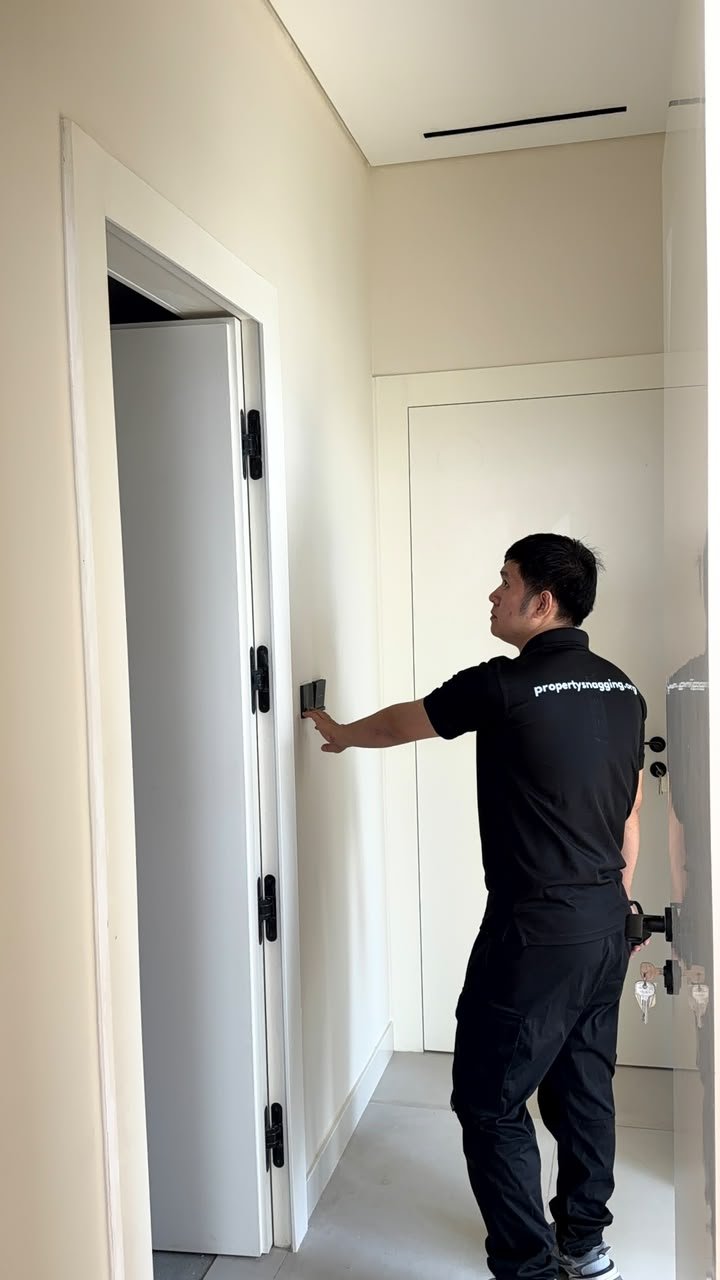
Apartment snagging covers one sealed unit. The inspector works room by room: walls, ceilings, floors, doors, windows, kitchen, bathrooms, joinery, electrical points, plumbing and every AC unit. Balconies, door and window seals and water pressure matter a lot, because a leak in your apartment can damage the unit below. If you are buying in a tower, apartment snagging in Dubai is usually a half-day job and gives you a clear list before you move in.
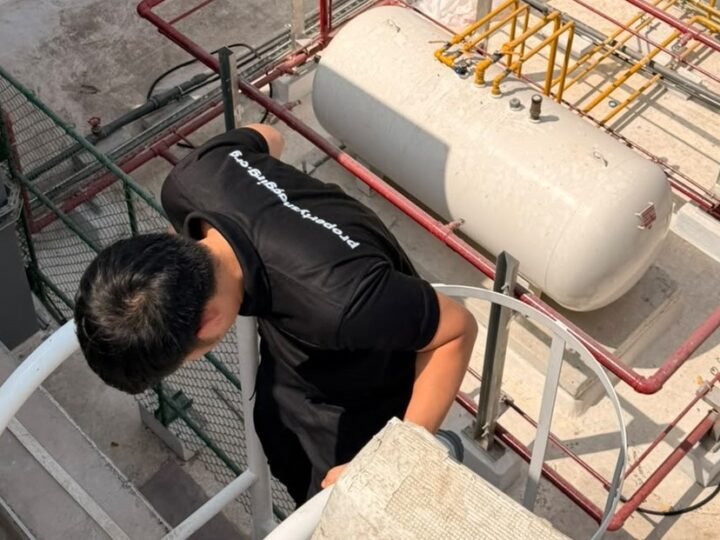
Villa snagging covers the building and everything around it. That includes the roof and terrace waterproofing, the facade and external paint, boundary walls and gates, driveway, garden drainage, and often a pool and its plant room. Villas also have longer MEP runs, which means more places for problems to hide. Villa snagging and inspection in Dubai takes longer, often most of a day for a large property, because there is simply more to test.
If you are buying a townhouse, you get a mix of both. See our guide to townhouse snagging for what to expect.
What is de-snagging?
Snagging finds the problems. De snagging (usually written de-snagging) is the work that fixes them.
Every item on your snag list is fixed by the developer’s or contractor’s team.De-snagging then usually ends with a re-inspection, where the items are checked again to confirm they were fixed properly. Ask for this. A repair that was painted over but not actually fixed will cost you later.
A sensible pattern looks like this: snagging inspection, report to the developer, de-snagging works, re-inspection, then final acceptance.
How the snagging process works, step by step
- Book before you accept the unit. Contact a snagging company after you receive the completion or handover notice, and before you sign the acceptance. Give the property type, size and location.
- Arrange access. For a new property, the inspector coordinates entry with the developer or you can attend with them.
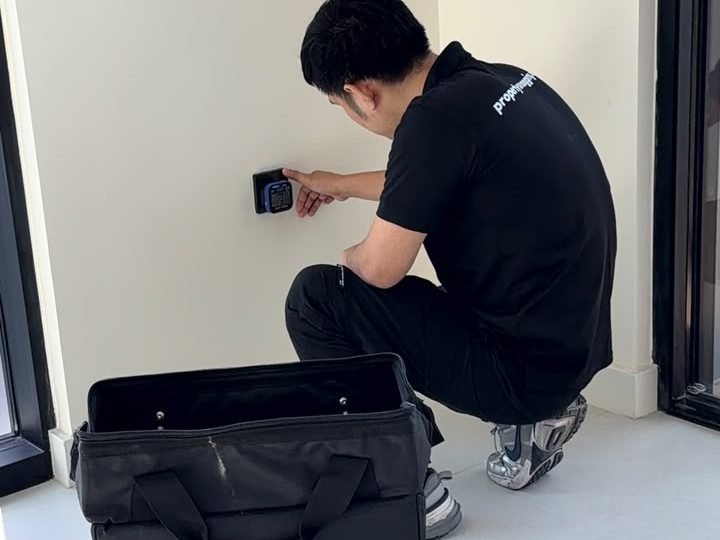
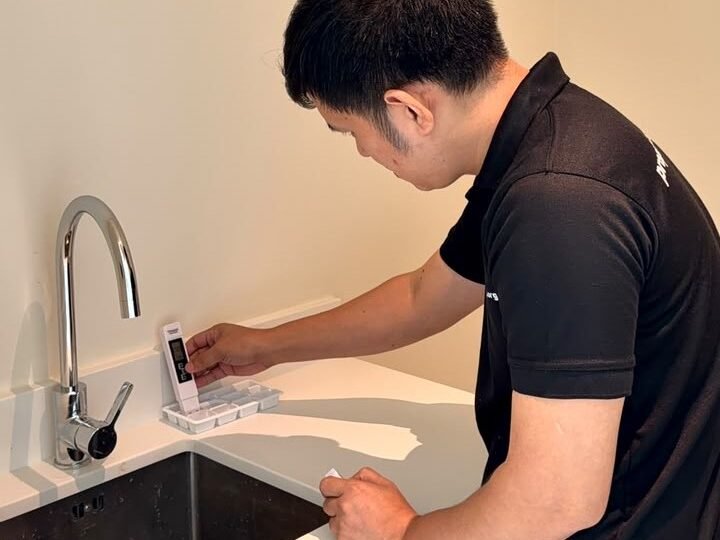
- The inspection. The inspector works through every room and system. Good teams use thermal imaging cameras, moisture meters, laser levels, and socket and RCD testers, and they test taps, drains, doors and AC under real operation.
- The report. You receive a written report with photos, locations and severity ratings, organized by trade.
- Submit it to the developer. You send the report as your formal snag list.
- De-snagging and re-inspection. The developer fixes the items, and the inspector confirms them.
- Sign off. You accept the property once the important items are closed.
When is the best time to book a snagging inspection?
Before handover is the strongest moment, because the developer fixes defects at their own cost. But it is not the only one:
- During the defects liability period. If you have already moved in, an inspection can still document what the developer needs to fix while you are covered.
- Before buying a resale unit. A pre-purchase inspection shows the real condition and helps you negotiate the price.
- At move-in or move-out. Tenants and landlords use inspections to record condition and avoid deposit disputes.
- After renovation or fit-out. It checks the contractor’s work before you make the final payment.
Snagging across all seven emirates
The process is essentially the same everywhere, but local regulations and developer practices vary. Dubai gets the most attention, yet buyers across the UAE use snagging:
- Dubai: the largest market, with new communities in most areas.
- Abu Dhabi: growing demand on islands and new master-planned communities. See snagging in Abu Dhabi.
- Sharjah and Ajman: many buyers purchase apartments and villas for value and family living.
- Ras Al Khaimah: rising demand from investors. See snagging in Ras Al Khaimah.
- Umm Al Quwain and Fujairah: smaller markets where independent inspection is harder to find, so buyers often travel for it.
Whichever emirate you are buying in, check your contract for the defects period and the handover procedure, because those terms decide how long you have to act.
How to choose a snagging company in Dubai
Not every inspector is equal. When you compare a snagging company in Dubai, check these things:
- Credentials. Look for recognised certification and local approval. Property Snagging UAE is RERA-approved and its inspectors are InterNACHI certified.
- Independence. The company should work for you, not for the developer or agent.
- Scope and equipment. Ask whether thermal imaging, moisture meters and laser levels are included in the price, and whether the inspection covers every system, not just the visible finishes.
- A real sample report. If a company will not show you one, that tells you something. Look for photos, locations and severity ratings.
- Clear, fixed pricing. Ask for a written quote before booking, based on size and type.
- Speed. A good report arrives the same day, because delays cost you time at handover.
- Experience across property types. Apartments, villas, townhouses and commercial units each need different checks.
For a breakdown of pricing, read our guide to snagging and inspection costs in Dubai.
Common mistakes buyers make
- Signing the handover form before the inspection.
- Relying on the developer’s own checklist as the only record.
- Booking inspection after moving furniture in, which makes some defects harder to prove.
- Accepting a vague report with no photos or locations.
- Skipping the re-inspection after de-snagging.
Frequently asked questions
What is snagging in Dubai in simple words? It is a thorough inspection of a new or newly finished property to find defects before you accept it, so the developer can fix them.
What is a snag list? It is the written report of every defect found, with photos, locations and severity, which you give to the developer.
Is snagging mandatory in Dubai? No, it is not a legal requirement for buyers. It is strongly recommended because it protects you before you accept the property.
How long does snagging take? An apartment usually takes a few hours. A villa can take most of a day, depending on size.
What is the difference between snagging and de-snagging? Snagging finds the defects. De-snagging is the repair work that fixes them, followed by a re-inspection.
Can I snag a property I already live in? Yes. If you are still within the defects liability period, an inspection can document problems for the developer to fix.
Book your snagging inspection
If you are about to receive keys, the best time to act is now. Property Snagging UAE has been inspecting homes since 2010, across all seven emirates, with 400+ checkpoints per inspection and a clear, photo-backed report you can send straight to your developer.
Request your free quotation and find out what your property is really hiding before you sign.