
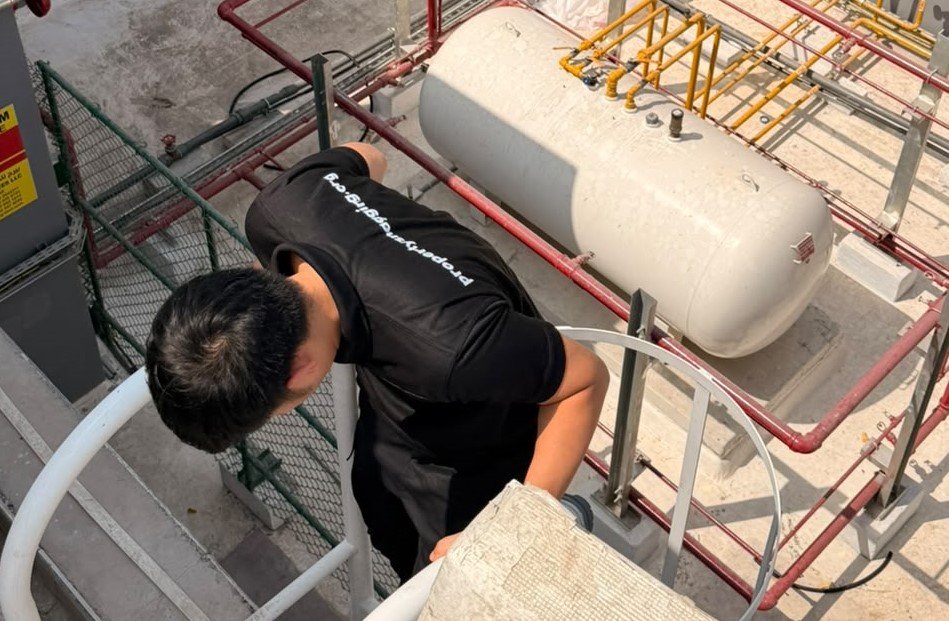
Property Snagging UAE is an in-depth inspection of a new or resale property to identify any defects before handover or occupancy. A trained inspector will check all the finishes, plumbing, electrical systems, air conditioning and waterproofing. After the inspection, you will receive a detailed report with photographs highlighting any defects. These issues can then be raised with the developer or seller, who will be responsible for resolving them where applicable.
When purchasing a property in the Emirates you will have heard the term property snagging. Some will think of it as an added extra but others will refuse to hand over the keys until they have had the snagging done. Due to the amount of defects that can come up on even the best new properties most experienced buyers fall into the second category.
This guide will help you understand property snagging. We will explain what it is, why it is really important here, when to get it done and what a good inspection will look like. Whether you are a first time buyer, experienced investor or agent this guide should help you.
What Does Property Snagging Mean?
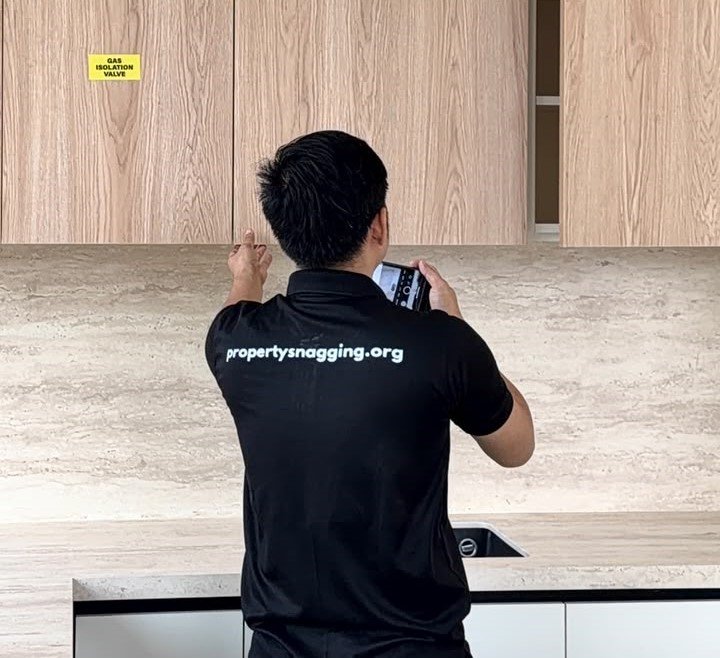
Snags are any defects or incomplete or low quality work within a property. Snagging is the process of identifying, documenting and reporting snags so that they can be resolved.
Snags can range from minor to major:
- Cosmetic issues: Marks on walls, scratches on glass, chipped tiles, uneven grout lines.
- Functional issues: Doors not closing, no power to sockets, no water pressure, slow drains.
- Invisible issues: Dampness behind tiles, lack of insulation, leaking air condition ducts, poor waterproofing.
- Safety hazards: Loose balcony rails, incorrect wiring, no smoke detectors.
The first two items are easy to identify however the latter two are the reasons people often employ professionals. In general, the invisible and safety issues will require some tools and knowledge to identify. These tend to be the most expensive issues to miss.
Why Property Snagging Matters So Much in the UAE
Three things make property snagging in the UAE more important than in many other markets.
Speed and Volume
Units are delivered in massive quantities over the course of the year. With such a high volume of units being delivered, even with strict quality processes, there will be omissions.
Weather
The extreme heat (up to 50°C) during the summer months, high humidity and occasional heavy rain make everything tested. Any small gap in window sealing or any badly angled balcony will cause problems.
Time frames
Under article 40 of Law No. 6 of 2019, Developers are legally responsible for rectifying defects in the mechanical, electrical and plumbing systems for 1 year and structural defects for 10 years. This is a great assurance for buyers however they must identify and report these defects. Any issues missed will then fall upon the buyer.
Put simply, snagging moves the cost of defects back to the people who should pay for them.
When Should You Book Property Snagging?
There isn’t just one right moment. It depends on where you are in the buying or owning cycle.
| Stage | What it’s for | Service to look at |
| Before handover of an off-plan unit | Find defects before you sign the handover papers | Pre-handover snagging |
| Newly completed home | A full check of a brand-new build | New build snagging |
| Buying a resale property | Spot problems before you agree the final price | Pre-purchase inspection |
| Before the defect liability period ends | Catch latent defects while the developer still has to fix them | DLP snagging |
| Start or end of a tenancy | Record the condition to avoid deposit disputes | Move-in and move-out inspection |
For off-plan buyers, the most important booking is the one before handover. Once you’ve signed, it can be harder to get the developer to treat small items as urgent. The second most useful one is a check around month ten or eleven, before the first-year defect cover runs out.
What Does a Property Snagging Company Check?
A professional property snagging company works through the home system by system, not just room by room. Whether it’s apartment snagging, villa snagging or townhouse snagging, a thorough inspection covers these areas:
- Walls, floors and ceilings: cracks, hollow or uneven tiles, paint defects, gaps and level issues
- Doors, windows and joinery: alignment, locks, seals, hinges, kitchen units and wardrobes
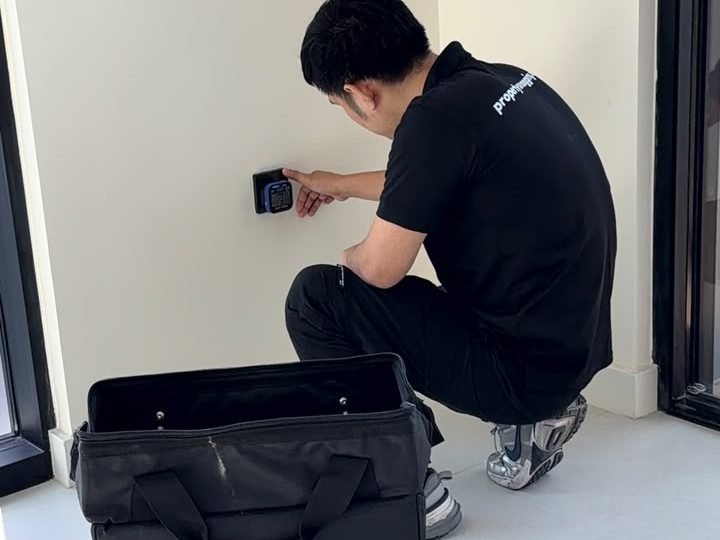
- Electrical: power and polarity at every socket, earthing, lights, switches and the distribution board
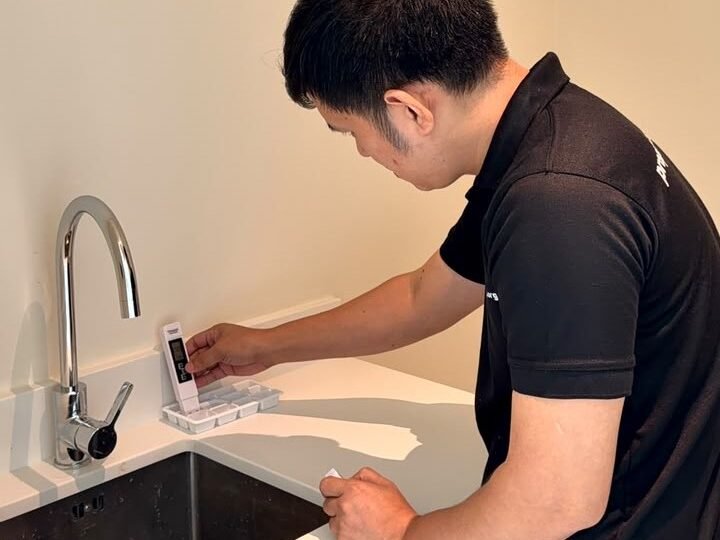
- Plumbing and drainage: water pressure, hot water, leaks under sinks, slow drains and floor slopes in wet areas
- Air conditioning: cooling performance, thermostat response, duct leaks and condensate drains. AC water leaks are one of the most common post-handover complaints.
- Waterproofing: bathrooms, balconies, roofs and terraces
- Safety items: railings, glass, smoke detectors and fire stopping
- Outdoor areas (villas and townhouses): boundary walls, paving, drainage, pools and roofs
Why tools matter
A proper inspection goes beyond a visual check. A thermal imaging and moisture inspection shows temperature and moisture differences behind surfaces, so inspectors can spot wet patches, missing insulation and overheating wires that look perfectly fine to the eye. If you want to see real examples, read our post on what thermal imaging finds.
Other everyday tools include socket testers, moisture meters, spirit levels, laser measures and tapping tools for hollow tiles.
How the Property Snagging Process Works
Most inspections follow the same simple path:
- Booking. You share the property type, size, location and your handover or inspection date. Ask the developer how much time you’ll have on site.
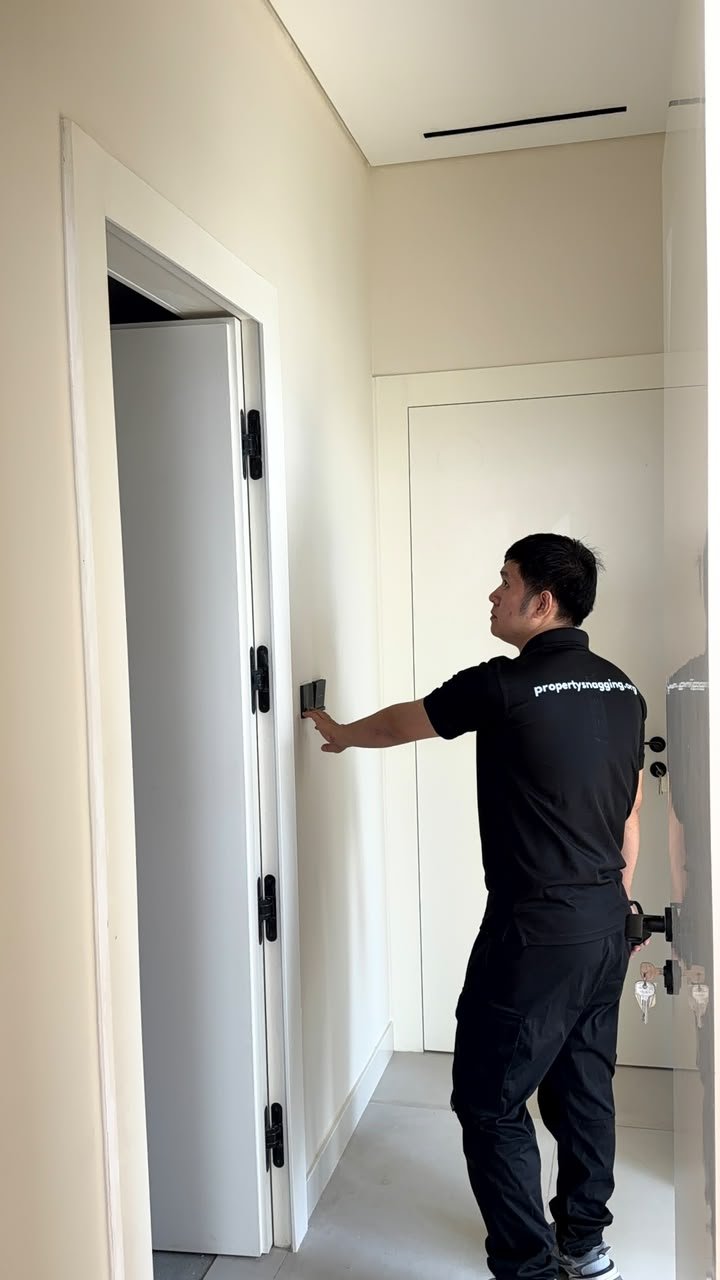
- The inspection. The inspector checks every room and system. A one-bedroom apartment usually takes two to three hours. A large villa can take most of a day.
- The report. You receive a report with photos, room locations and a clear description of each snag, usually within a day or two.
- Submit to the developer. You or your agent send the report to the developer’s customer care or handover team and ask for a repair timeline.
- Repairs. The developer’s contractor fixes the listed items.
- De-snagging. The inspector returns to check that each item was properly fixed, not just covered up. Only then do you sign off.
Tip: try to attend the inspection. Most inspectors are happy to walk you through what they find, and you’ll learn a lot about how your home works.
Property Snagging Across the Emirates
The basics of property snagging are the same everywhere in the UAE, but each emirate has its own building types and common problems.
- Dubai has the largest number of off-plan handovers, from apartment towers in JVC and Business Bay to villa communities like Dubai Hills and Damac Hills. See our property inspection in Dubai services.
- Abu Dhabi has many waterfront projects on Yas, Saadiyat and Al Reem, where humidity and sea air test window seals, balconies and metal fittings. Read more about snagging in Abu Dhabi.
- Ras Al Khaimah is growing fast around Al Marjan Island, with plenty of beachfront and resort-style homes. Learn about snagging in Ras Al Khaimah.
- Sharjah and Ajman attract many first-time buyers and families. Plumbing, drainage and AC checks come up a lot here.
- Fujairah and Umm Al Quwain have more coastal villas and new waterfront projects, so roof waterproofing and storm drainage deserve extra attention.
Note that defect warranty rules can differ between emirates and between sale contracts. Always check your SPA so you know exactly how long your cover lasts.
Advice for Beginners, Investors and Agents
If you’re a first-time buyer
You don’t need to know what a hollow tile sounds like. You just need someone who does. Book your inspection early, read the report carefully, and don’t feel pressured to sign handover papers on the day if serious items are still open. Ask questions. There are no silly ones when it’s your money.
If you’re an experienced investor
You probably already know that defects hit your returns through tenant complaints, maintenance calls and empty months. Treat property snagging as a standard step for every unit, like conveyancing. If you plan upgrades before renting out, book a renovation and fit-out inspection before you make the final payment to your contractor.
If you’re a real estate agent
Recommending a trusted snagging partner shows clients you care about the result, not just the deal. It also cuts down on stressful calls after handover. For rentals, a move-in and move-out inspection gives landlords and tenants a fair, photo-backed record that makes deposit discussions much simpler.
How to Choose a Property Snagging Company
Not all inspections are equal, and the cheapest quote is rarely the best value. Before you book, check these points:
- Credentials: Look for a licensed business with recognised training, such as RERA approval and InterNACHI certification.
- Tools: Thermal imaging and moisture testing should be part of the standard inspection.
- Sample report: Request to view one. It should include clear photographs, locations, and straightforward descriptions.
- Turnaround: Given the tight handover deadlines, the report should be delivered within 24 to 48 hours.
- De-snagging: Verify whether a follow-up appointment is available and determine its cost.
- Coverage: Make sure they work in your emirate without heavy travel charges.
- Clear pricing: You should get a written quote that includes VAT, with no surprises.
We go into more detail on this in our guide to choosing a property snagging company in the UAE.
Frequently Asked Questions
What is property snagging in the UAE?
It’s a professional inspection of a new or resale property to find defects before handover or purchase. You get a photo report that the developer or seller uses to fix the issues at their cost.
Is property snagging worth it for a brand-new home?
Yes. New homes are where it matters most, because the developer is still responsible for repairs. Even well-built units usually have a long list of snags.
How long does a snagging inspection take?
Around two to three hours for a one-bedroom apartment, and up to a full day for a large villa.
Can I do property snagging myself?
You can spot cosmetic issues yourself, but hidden problems like moisture behind tiles, wiring faults and AC duct leaks need specialist tools and training.
How much does property snagging cost in the UAE?
Prices depend on the property type, size and location. See our pricing guide for current rates.
What happens after the snagging report?
You send it to the developer, they fix the items, and a de-snagging visit confirms the repairs before you sign off.
To Sum UP
Property snagging in the UAE isn’t about pointing out faults with the developments, it’s ensuring that you receive exactly what you’ve paid for and that the people who have built your home will put things right. Snagging can help you avoid months of hassle and thousands of dirhams of repair costs by spending just a few hours checking everything is correct.
Whether you’re taking the keys to your first apartment in Dubai, adding a villa to your portfolio in Abu Dhabi or helping a client on a resale property in Ras Al Khaimah. We recommend you get your property checked.
Have questions about your property? Our RERA-approved, InterNACHI-certified team is happy to help. Request a quote or call 058 143 9243 to talk to an inspector.


[…] To get a broad overview of property snagging in the whole country, please view our full guide to property snagging in the UAE. Otherwise, to understand what to expect from general property snagging services, please view […]
[…] This guide walks you through what license and certifications really mean in Dubai, the questions worth asking before you book, how to read snagging company reviews in Dubai, and the red flags to avoid. It’s written for first-time buyers and for agents and investors who book inspections regularly. If you’re new to the whole idea, start with our guide to property snagging in the UAE. […]
[…] the developer. If you’re curious about how this works for villas and townhouses as well, our complete guide to property snagging in the UAE covers the wider […]