
Moving into a new home should be exciting. However, discovering defects after receiving the keys can quickly become frustrating. Apartment snagging helps you identify problems with finishing, fittings, plumbing, electrical fixtures, and other accessible parts of your property before you settle in. If you are buying a built apartment in Dubai or taking possession for the first time, perform a careful inspection. It helps you report concerns before they become everyday inconveniences.
A property may look beautiful from the outside with its lovely floors, freshly painted walls, and modern fittings. You can easily overlook several minor inconveniences. The cupboard door may not close. It may leak water slowly from the bathroom drain. The air conditioner may not cool the room sufficiently. You must address these minor defects before moving the furniture and personal belongings into the apartment.
The same principle applies to snagging more broadly. Those who organize villa snagging or a villa inspection will see the need for attention to detail. It is true that a villa is not an apartment. However, it has a different layout and size. Yet the purpose of this step is the same: learn the house’s characteristics and determine defects to fix.
Why Apartment Snagging Matters Before Moving In
A new apartment does not necessarily guarantee the purchase of a defect-free apartment. Construction crews perform various construction works, mounting, and finishing activities, and they may overlook some minor details during construction.
The purpose of apartment snagging is to examine the apartment systematically rather than assessing the overall impression. It enables one to note open defects, check the available fixtures, and report those issues that may require the developer’s attention.
It is essential to organize snagging in time. Beforehand, it is critical to familiarize yourself with the developer’s procedures for inspecting the apartment and report defects following their established routine. If you already have keys to the apartment, it is possible to document all the observed shortcomings and report them to the developer in a timely manner. Nevertheless, the procedures for doing so and the parties responsible for addressing the issues may differ.
In addition, a snagging report allows one to clearly describe the problems to the developer. Instead of saying something looks unfinished, indicate the defect’s exact location and its nature. If necessary, attach photos of the issue.
Examine Walls, Ceilings and Paintwork
Begin your inspection by looking at the walls and ceilings in each room. Uneven paint, cracks, chips, stains, and badly finished joints will be easiest to see in the light. Walk around the room and view the walls and ceilings from an angle.
Check especially carefully around windows and doors, where the paint may not go smoothly. Look for paint spots on switches, skirting boards, floorboards, and fittings. If you find any damaged spots, take a picture of them and make a note of their location.
Minor scratches may not be a big problem. A few cracks might not indicate structural issues. Do not simply paint over cracked walls, unexplained wet spots, or repeated stains.
Check Doors, Windows and Built-In Cupboards
Doors and windows are among the most used features in the apartment. A broken hinge or a stuck latch will quickly become a deal-breaker for any tenant. Test every single interior door by opening and closing to check for proper alignment and spring tension. Make sure that the mechanism allows for smooth closing without too much pressure required to initiate the motion. Inspect the hinges, handles, locks, and doorstops (where applicable) to ensure proper functionality.
Windows have a large surface area exposed to the elements. Some windows may show imperfections such as cracks, scratches, or chips. Check that all elements of the window mechanism work correctly, not sticking or sliding out of place. Operate handles, locks, and release levers to ensure they do not require abnormal effort. Additionally, they should not have faulty mechanisms. If possible, test the window’s closing mechanism. Do not risk injury at heights. Do not tamper with mechanisms the seller has secured.
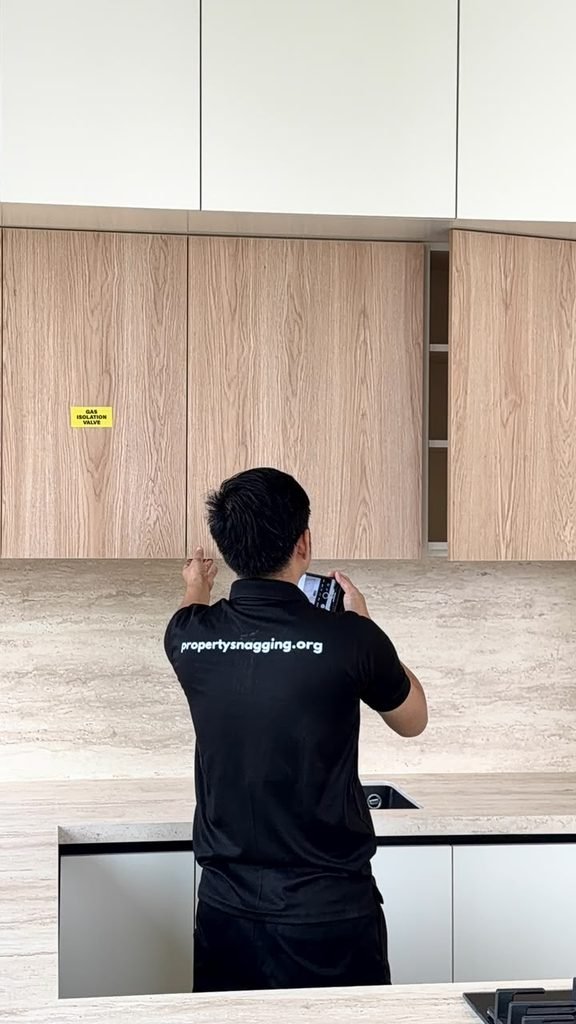
Open kitchen cabinets, wardrobes in bedrooms, and other storage units. Open and close them to ensure drawers and doors do not stick from manufacturing defects. Check all hinges and assess the functionality of each item’s fittings. A tenant cannot overlook a chipped laminate. You will notice a split handle. Buyers must realign a cabinet that does not align correctly.
Inspect the Kitchen and Its Fittings
A modern kitchen may look impressive from the outside. To assess its quality, you need to get closer and inspect more closely. Make sure that there are no scratches, chips, uneven joints, or loose edges on the worktop and cabinets. Take a closer look at the edges and see if there are any gaps around the sink or backslash.
If the seller includes the kitchen appliances, make sure that the items correspond to the purchase description. Double-check how the devices work if it is safe for you to do so, and try locating the main issues.
Turn on the kitchen tap and check that it connects to the water supply. Check if the water flows properly and look for any leaks below the sink if you can reach them. Examine the sealant around the sink and worktop for cracks or uneven surfaces.
Make sure that no electric outlets and switches have any damage. If it is safe, you should test the regular outlets and switches. Leave the job of checking the electric panel and wiring to a specialist.
Give the Bathroom Extra Attention
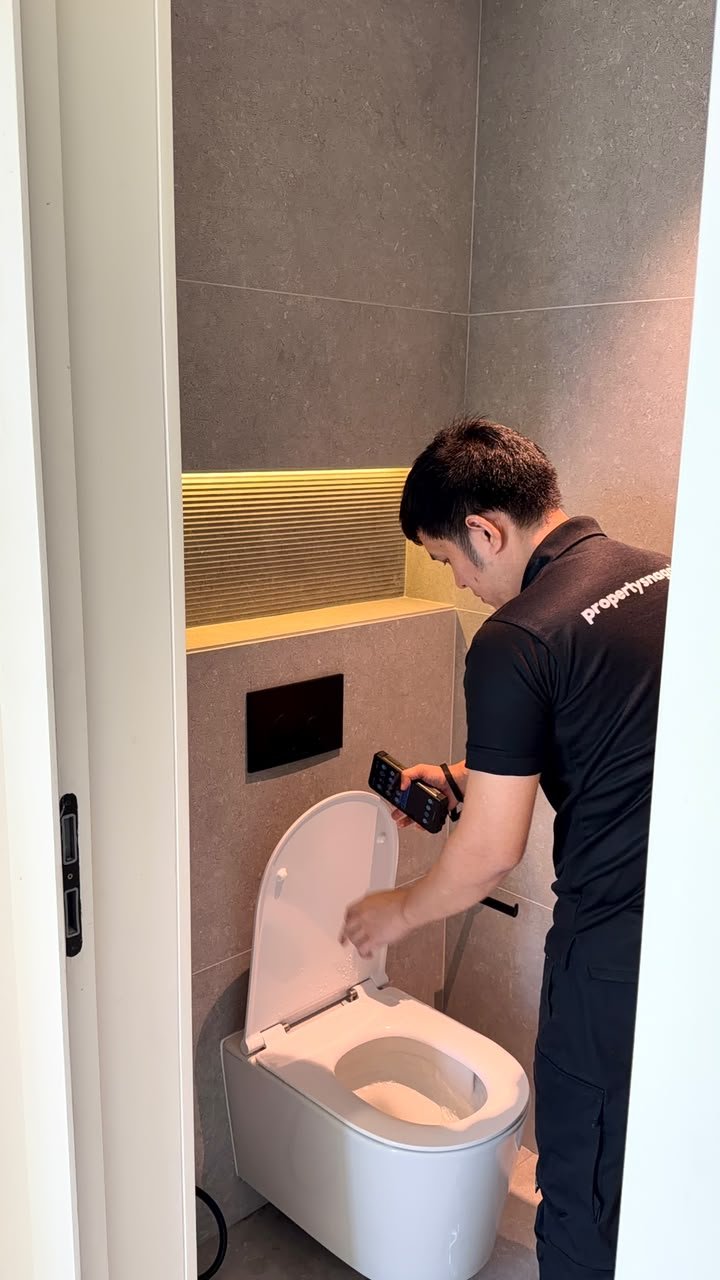
Inspect bathrooms for leaks and assess finishing quality. Any leak or bad finishing may cause serious inconveniences and structural damage. Inspect tiles, grout, sealant, shower enclosure, basin, toilet, and available accessories.
Look for cracked tiles, uneven grout joints, absent sealant, broken fittings, and gaps around sanitary appliances. If available, verify that the water supply is on, and if it is safe, turn on the taps and flush the toilet. Ensure the water flows adequately and search for leaks around open-able valves.
Check if there are musty odors, unexpected spots, and damp areas near the corners and around the accessible parts of the sanitary appliances. Ensure these defects do not appear, as they may indicate a serious issue that requires attention.
Do not rely on visual checks for the waterproofing layer; its performance is critical, and few issues occur without it. If there are concerns about moisture or water flow in the bathroom, ask further, not relying only on the visual appearance of the tiles and their finishing.
Test the Air Conditioning and Ventilation
In Dubai, a proper functioning of air conditioning should be a must for a comfortable living. It is common that a newly handed over apartment might have some issues with the cooling system even if everything seems to be fine at first glance.
Make sure that the system is operating, turn it on the regular way and wait until it starts to cool the desired area. Check if the unit itself is working, air is coming out of vents, there are no strange sounds, smell, or water leaking around the machinery.
Also, inspect the vents for accessibility, signs of damage or dryness around vents, or ceiling watermarks. Do not force the grilles; ensure the finish is not defective; and check for signs of moisture. If there are multiple units or zones, check the accessible ones and their controls. A simple check can only confirm major issues. If you suspect that the problem is bigger and there are no results after several trials, contact the developer or a professional engineer.
Look at Flooring and Skirting Boards
People can easily overlook flooring when an apartment is tidy and ready for viewing. Beforehand, make sure to walk throughout every room and check the floor for any scratches, chips, stains, transitions, and damaged edges.
In case of tiled, make sure to inspect the grout lines and look for cracked tiles or unevenly laid joints. For laminate, timber, or any other type of flooring, check for popped edges, gaps, and worn-out or uneven spots on the surface. You can feel the unevenness on the soles of your feet, so do not assume that an unaligned row of tiles or planks is an architectural feature.
Inspect the skirting boards for any lifting, gaps, chipped paint, or uneven corners. In addition, make sure to check the transition between different areas in the apartment, such as the doorways, balconies, kitchens, and bathrooms.
It is better to photograph the defects under a good light. A shot of the whole room will help you identify the problem area, but a close-up will do if the issue is clearly visible.
Check Electrical Fixtures and Plumbing
Switches, sockets, light fittings, taps, drains, and visible pipework are all features of the apartment that should be subject to a comprehensive inspection.
Operate accessible switches and test accessible switches. Check switches for broken face plates, loose fittings, missing covers, or failure to operate. Do not remove the covers of sockets, expose live conductors, or remove electrical panel covers. Do not tamper with faulty electrical equipment; report it immediately.
For the plumbing system, operate accessible taps and check the run-off from accessible drains. Listen for abnormal sounds coming from the pipework, and look for water staining near visible fittings. Report whether the flow of water seemed to be normal or not, but do not attempt to remedy any problems yourself.
It is important to make the distinction between spotting a fault and diagnosing its cause. It may be necessary to call upon specialist assistance to assess a situation and recommend remedial action.
Inspect Balconies and External Doors
If the apartment has a balcony, check the floor, the railing, how open/close is the door and the state of the visible surfaces. Report any broken tiles, unfinished edges, stains or signs of water accumulation. Never try to lean over the railing or check its strength.
Ensure the balcony door opens and closes normally, and ensure the locking mechanism works correctly. Check if the door has any seals on the frame and if these seals are damaged. You should report water traces near the threshold.
The balconies drainage and waterproofing can be a concern, but a visual inspection can only confirm the obvious issues. The actual waterproofing layer can be under the surface and it can not be determined without proper tests and documentation. If you have concerns about the drainage system, water proofing membranes or other safety concerns, report them.
Record Defects Clearly and Keep a Copy
Finding a defect is only half the battle; the other half is making sure that it is documented correctly and can be easily found by the responsible party.
When snagging an apartment, always remember to indicate the room, the precise location of the defect, the details of the issue, and whether it poses a hazard to health and safety.
Take photos if possible and avoid mentioning multiple issues in one sentence.
Instead of “kitchen defect,” write “the door of the second cabinet from the left at the kitchen cannot be closed properly.” This way, the location and the nature of the problem are defined, while the possible cause of the malfunction is not indicated.
Make sure to keep a copy of the report and all the messages exchanged with the developer and their contact person.
Remember to go over the fixed items after the repair service has been hired and confirm that everything is functioning correctly.
If there are still issues, make sure they are documented and that the appropriate parties are aware of them.
Apartment Inspection or Professional Snagging Service?
You can carry out an initial walk through yourself, especially if you use a room-by-room checklist and take your time. However, a professional apartment inspection may be useful when you want a more systematic review of visible finishes, fittings, and accessible systems.
Before hiring a service, ask what the inspection includes, whether you will receive a written report with photographs, which systems can be tested, and whether a follow-up inspection is available after repairs. Confirm any exclusions because a standard visual inspection does not necessarily include invasive testing or certification of concealed systems.
If you own a villa instead, villa snagging may involve additional areas such as external walls, roof-accessible components, boundary walls, landscaping, and other features relevant to the property’s design. A villa inspection and an apartment inspection share the goal of documenting concerns, but the inspection scope should reflect the property’s layout and systems.
Choosing the right inspection approach depends on the property, your confidence in carrying out checks, and the level of detail you need. A qualified inspector can help identify visible defects and flag concerns that may require specialist testing.
Mistakes to Avoid Before Moving In
One mistake that people tend to make is rushing through the property because it appears new and clean. A walk around the living room will not identify whether each window closes correctly or if the bathroom fittings behave as intended.
Another mistake is to rely on a memory, rather than recording any concerns on a written note. Once multiple rooms have been checked, it is easy to forget the exact location or even the nature of any mark or fitting that was reported as a concern. Always record any worries as you go and take pictures before furniture or personal possessions obscure any potential problem area.
Do not assume that all defects will be resolved automatically. Ask how concerns should be reported, who should check or review them, and how a resolution process should proceed following handover. Wherever possible, maintain written communication.
Finally, do not investigate any electrical, structural, or concealed plumbing issues on your own. Simply report what can be seen and request a specialist survey if such a problem cannot be resolved by an initial snagging inspection.
Move Into Your New Home With Confidence
Your new apartment should be fit for everyday use, not just look nice during a viewing, so taking the time to check the walls, flooring, windows, kitchen, bathrooms, air conditioning, and any accessible fittings can identify any potential problems that may need to be resolved before your keys are handed over.
A responsible approach to property snagging will mean ticking off any visible defect methodically, recording concerns in detail, and always maintaining good communication with either the developer or the relevant property representative. Whether you need an apartment inspection or are considering villa snagging for another property, always focus on what can be seen and tested and request a specialist survey if possible. Before keys are provided, always review all reports and confirm that any reported defect has been resolved where possible. Maintain good record keeping as a means of demonstrating and identifying any concern, but always remember that a snagging inspection is not a definitive survey and will only highlight a few common issues.
