
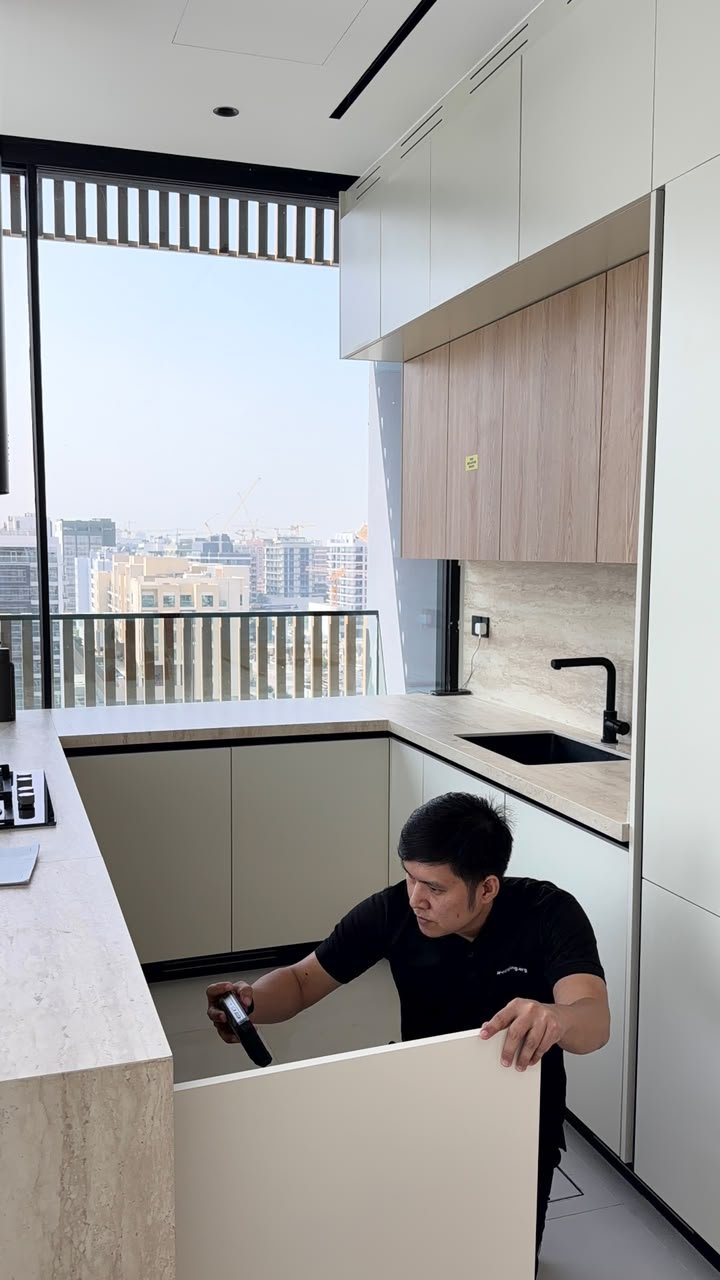
A home may look great, yet it can hide problems. Property snagging Dubai assists you to identify visible defects, unfinished work and faulty fittings before accepting the keys to your property. Some concerns, however, can require more than a careful examination of walls, floors and doors. Detecting moisture behind a completed work surface, an uneven floor or a weak air conditioning system may require the use of appropriate equipment.
Homes in the UAE range from modern city apartments to large family villas. A systematic inspection reveals to you the actual condition of your property before handover. An experienced inspector can use, for example, a moisture meter, a thermal imaging camera, electrical testers and precision measuring tools, to investigate a concern.
Equipment does not replace experience. Its value is that it provides information that the inspector can use to check a specific condition and that it can be used to back his observations with evidence. If you understand what these snagging tools do, you can select the right snagging services and be aware of what to expect from a professional inspection.
Why a Visual Walk through Isn’t Enough
A simple walk through will pick up the obvious. A chipped tile, scratched glass, damaged paint, a loose cabinet handle and a door that won’t close will all be obvious and you should record your findings before accepting the property.
However, many defects will not be obvious and a ceiling may have been repainted following a leak. A floor may have a level difference that is not visible but an AC unit may run without cooling the room evenly. A professional inspection can go beyond the visual check and can add functional tests, and where necessary, specialist tools.
The inspection should start with an inspection of the property’s condition and those areas that may need your attention. Using equipment with no clear purpose will not serve you. Take, for example, an inspector who notices a stain near a bathroom. A moisture meter can help him to investigate this. A thermal imaging camera can assist him to study temperature patterns around a ceiling or wall. Neither tool confirms a defect on its own, but the results can help to determine whether the area needs a closer look.
The goal is simple. Record what can be observed, flag the potential concerns and avoid making unsupported assumptions.
Moisture Meters: Checking for Damp and Leaks
Moisture problems deserve a closer look in bathrooms, kitchens, utility areas, ceilings and around plumbing connections. Even the smallest leak can cause trouble if nobody discovers it, especially if moisture reaches the surround finishes.
A moisture meter can measure moisture related properties in a material. Depending on the instrument and the surface, it can help the inspector to find readings that are different from the area around them. For example, an inspector may compare readings near a visible stain with readings from an unaffected part of the same wall. This can help to determine which areas deserve further assessment.
Reading interpretation requires care. The material in question can behave differently and metal, salts and surface coatings can all affect a measurement. A reading on its own is not enough to indicate where the moisture came from, or to confirm a leak. If the inspector suspects a plumbing problem, he will consider the location, the visible evidence, the surrounding conditions and any history from the owner or developer. If the cause is not clear, a specialist may need to investigate further.
Thermal Imaging: Spotting Unusual Temperature Patterns
A thermal imaging camera can display differences in surface temperature. During an inspection, it can help the inspector to examine selected areas where temperature patterns may offer clues. This may be a ceiling, an accessible wall, a window frame or an area where moisture is suspected.
The camera can’t see through walls and it can’t reveal all hidden defects. A temperature difference can have many causes including airflow, differences in insulation, direct sunlight and the way the building is cooled. The conditions during the scan are important in order to get meaningful results. Indoor and outdoor temperatures, the operation of the AC and the materials involved all affect the readings.
Used correctly, thermal imaging can provide another source of evidence. If the results seem to indicate a concern, the inspector will document the area and recommend further assessment. He will not present an uncertain finding as a confirmed defect.
Laser Levels and Measuring Equipment: Checking Floors
Finishing defects go beyond scratches and chips. Consider floor levels, transitions between rooms and the alignment of installed parts. Precision measuring equipment, such as a laser level, can help the inspector to assess selected surfaces and to compare measurements across an area. It is useful when he notices a visible change in level, uneven flooring or a doubtful slope.
Drainage is most important in bathrooms and other wet areas. Water should flow towards the intended drain. If an area seems to collect water, the inspector will record his findings and decide whether further measurement or a specialist assessment is advisable.
They should compare measurements against the relevant specifications and tolerances. A reading that is different from another point is not necessarily an indication that there is something wrong with the installation. The point of measuring is to replace vague descriptions with clear information. Instead of calling a floor “uneven”, the inspector can record the area, the measurement and why it may need a review.
Electrical Testing Equipment: Checking Accessible Points
Electrical work needs to be handled with care during any inspection. The inspector should record visible damage to switches, sockets, light fittings and covers. A visual check cannot establish whether an electrical installation is fully safe or is performing correctly.
Depending on the agreed scope and the inspector’s qualifications, suitable test equipment can be used on selected accessible points or protective functions. The equipment and the tests should be appropriate to the system being assessed.
An inspector should not remove electrical covers, touch exposed conductors or try tests beyond his competence. If a concern involves concealed wiring or a distribution board, a qualified electrician should investigate it.
As a homeowner, don’t just ask whether a company owns electrical testers. Ask which checks are included, what qualifications the person doing them holds and how an abnormal result will be explained. A clear report separates a visible defect from a test result, and both from a suspected problem that needs more investigation.
Plumbing and Drainage: More Than Turning On a Tap
Plumbing concerns can arise in kitchens, bathrooms, utility rooms and outside areas. A leaking connection may leave a visible mark. A drainage problem may only become evident when using the fixture.
A property inspection may include running accessible taps, watching drainage, flushing toilets and checking visible pipework for leaks. When the agreed scope allows it, extra testing can be used to investigate particular concerns.
Tools can assist with this work but they shouldn’t replace a sensible sequence of checks. The inspector should understand any test that he runs, watch the result and document any abnormal result. Water collecting around a drain, for example, may indicate a drainage or surface level issue. However, the cause shouldn’t be assumed without further assessment. A damp patch below a sink might come from a connection, an old spill or another source.
Good reporting can explain the observation and name the next sensible step. This will give the owner and the contractor a clearer place to start.
How Snagging Tools Can Support Villa and Apartment Inspections
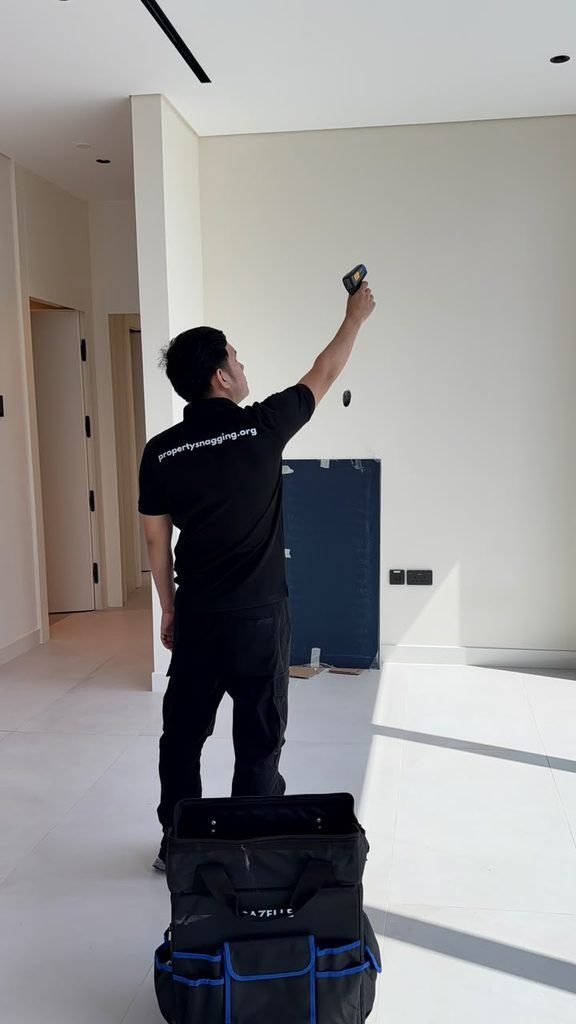
The equipment needed is partly dependent on the property type and features. Apartments and villas may have many similar inspection requirements, but the scope may not be the same.
An apartment snagging will usually focus on the unit’s accessible interiors: windows, balcony where applicable, fixtures, plumbing, electrical points and AC. Shared building services and common areas may need independent arrangements.
A villa snagging may include extra external areas. These can be accessible roof and terrace surfaces, boundary walls, driveways, garden drainage, pool surrounds and outdoor equipment. Not every villa inspection will include specialist testing of every system, so, make sure the scope is clear before the appointment.
Choose tools according to the concern. A moisture meter helps around a suspected leak. Precision measuring equipment helps with a floor level problem. Thermal imaging supports further investigation where temperature patterns look unusual. A reliable inspection is not defined by how many tools the inspector carries in. It is defined by whether the visit covers the agreed areas, uses suitable methods and communicates the findings accurately.
What Makes a Useful Snagging Report?
Equipment is only part of the service. The final report allows the homeowner, developer or contractor to understand the findings and to decide what to do.
A useful report identifies each issue clearly, gives its location and includes photos where they are helpful. When measurements or instrument readings are important, it explains what was checked and what the result indicates.
It also separates confirmed visible defects, from possible concerns that need more testing. An unusual moisture reading may justify further investigation. It should not automatically be described as a confirmed hidden leak. Clear categories make the report easier to review, as finishing issues, plumbing concerns and electrical observations can be grouped for the right contractor.
Before you book, ask whether the report includes photo evidence, specific defect locations, descriptions of findings and recommendations for further assessment. Find out about what the inspection excludes and whether a follow up visit is available after repairs.
Choosing a Property Snagging Company in the UAE
Don’t choose a company on price or promotional claims. Look at the inspection scope, the inspector’s experience, the report format and the methods used.
If you’re searching for a snagging company Dubai homeowners can use, ensure the provider covers your property’s location and type. Ask about experience with apartments, villas and the particular systems in your home. Confirm which tests are part of the standard service and which need separate specialist arrangements.
The same advice applies when you compare a snagging company Abu Dhabi owners might consider. Ensure the provider can attend the location and can explain the scope and limitations of its inspection.
When you search for the best snagging company, look past anyone claiming the title. Review sample reports, ask about how findings are documented, check qualifications and ask what happens if the inspection finds something that needs further testing. You may also come across propertysnagging.ae along with other inspection sites while researching. Treat any website as one source of information, and judge the actual service details, scope, qualifications and report quality before you decide. The best choice is the provider whose service fits your property and whose findings you can act on.
What to Ask Before Booking Snagging Services
Before you arrange snagging services, ask the provider what the inspection includes and how it will deliver the findings. This is most important if you are buying off-plan and have only a short handover appointment.
Ask whether the inspector will examine accessible finishes, doors and windows, plumbing, electrical fixtures, AC and other relevant systems. If you have specific worries about moisture, drainage or flooring, mention them before the visit. Ask whether specialist tools are used when appropriate, how readings are interpreted and whether specialist tests cost extra. A professional provider can explain the limits of its methods. It will not suggest that one inspection will reveal every hidden defect.
Check the expected report delivery time, the process for submitting findings to the developer and whether a re-inspection is offered after repairs. These questions will help you to compare providers on the quality and relevance of their service, not the length of their equipment list.
Protect Your Investment With a More Informed Inspection
Examine a newly completed property thoroughly before you take responsibility for its condition. A methodical walk through can find many visible defects. Other concerns may require measuring equipment, moisture detection, thermal imaging or other suitable tests.
Professional property snagging can bring these observations together in a structured report. This helps you to understand the findings and to see what needs attention. Tools support the process but their value lies in correct use, informed interpretation and clear communication.
Whether you’re comparing a snagging company Dubai buyers can contact or a snagging company Abu Dhabi homeowners may need, focus on the real inspection scope, the inspector’s qualifications and the quality of the final report. No inspection can guarantee that it will find every hidden problem. A careful one, chosen well and reviewed properly, helps you to make a better-informed decision before handover and gives you a clear record of the property’s condition.