
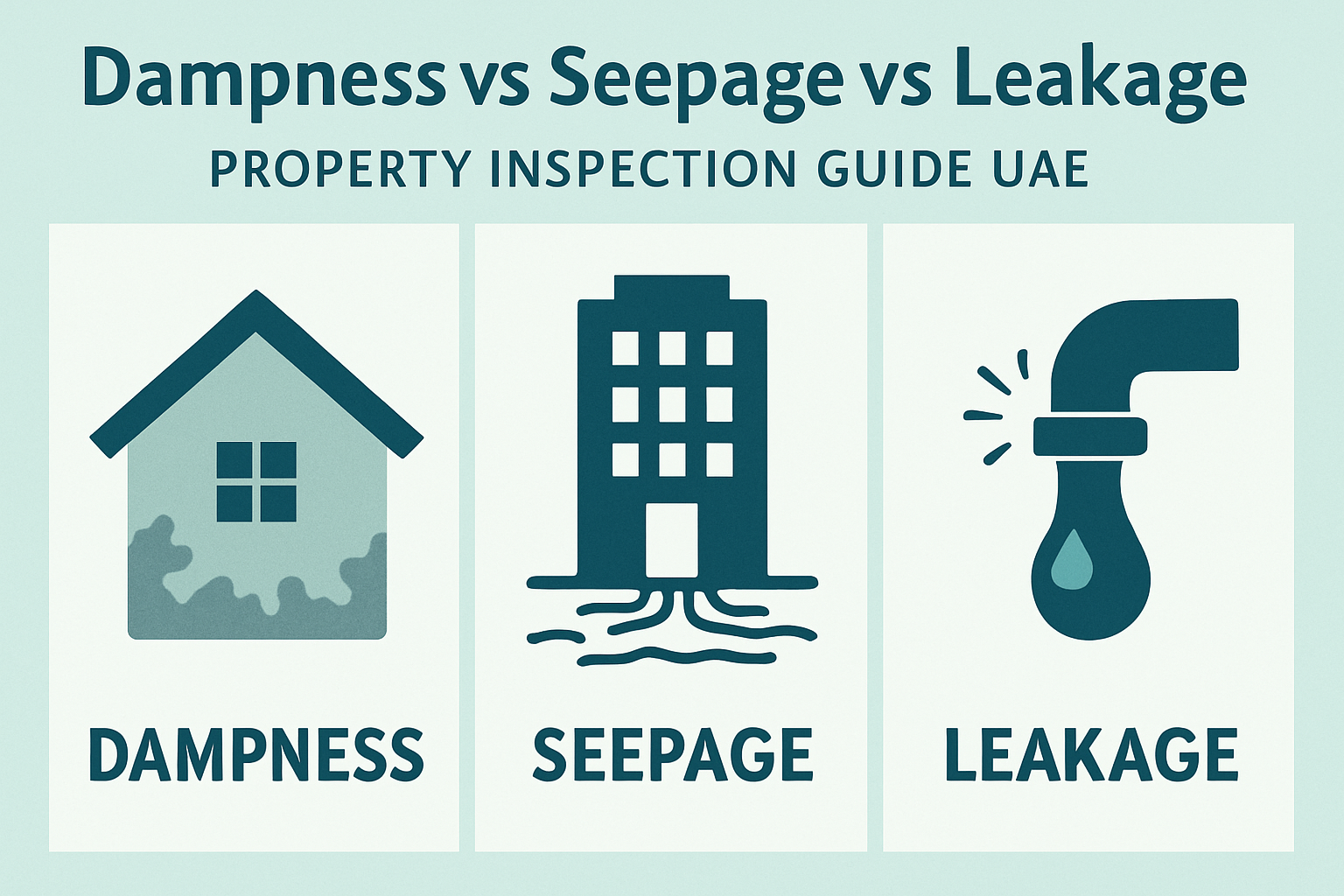
Difference Between Dampness, Seepage, and Active Leakage
Water-related issues are among the most common defects found in properties across the UAE. However, many property buyers and owners confuse three critical terms: dampness, seepage, and active leakage.
Understanding the difference between these conditions is essential for identifying the severity of the issue, determining the root cause, and taking the correct corrective action.
This guide explains each condition in detail and how professional inspection companies in the UAE detect and report them.
What is Dampness?
Dampness refers to the presence of excess moisture on surfaces such as walls, ceilings, or floors without visible water flow.
It is usually a surface-level issue but can indicate deeper problems if not addressed.
Common Causes of Dampness
- High indoor humidity
- Poor ventilation
- Minor water absorption through materials
- Condensation from air conditioning systems
- Early-stage waterproofing failure
Signs of Dampness
- Musty or unpleasant odor
- Peeling or blistering paint
- Discoloration on walls
- Mold or mildew growth
- Slight surface moisture
Dampness is often the first warning sign before more serious leakage develops.
What is Seepage?
Seepage is the slow movement of water through porous materials such as concrete, plaster, or brick.
Unlike dampness, seepage originates from an external or internal water source and penetrates through structural elements.
Common Causes of Seepage
- Cracks in walls or slabs
- Failed waterproofing systems
- Poor drainage design
- Water accumulation on roofs or balconies
- External wall exposure to rain or irrigation
Signs of Seepage
- Persistent damp patches
- Water marks or stains on walls and ceilings
- Efflorescence (white salt deposits)
- Softening or weakening of plaster
- Recurring moisture even after repainting
Seepage indicates a more serious issue than dampness and requires proper investigation.
What is Active Leakage?
Active leakage refers to visible and continuous water flow from a source such as a pipe, joint, or fixture.
This is the most severe form of water-related defect and requires immediate attention.
Common Causes of Active Leakage
- Broken or leaking pipes
- Faulty plumbing connections
- Damaged waterproofing membranes
- Blocked or overflowing drainage systems
- AC drainage line failures
Signs of Active Leakage
- Water dripping from ceilings or pipes
- Visible wet areas with continuous moisture
- Sudden increase in water bills
- Pooling of water on floors
- Noise of running water within walls
Active leakage can cause rapid damage to both finishes and structural components.
Key Differences Between Dampness, Seepage, and Active Leakage
| Feature | Dampness | Seepage | Active Leakage |
|---|---|---|---|
| Water Visibility | No visible flow | No direct flow but visible marks | Visible water flow |
| Severity Level | Low to moderate | Moderate to high | High to critical |
| Source | Surface moisture or humidity | Water penetration through materials | Direct water escape from source |
| Damage Potential | Gradual | Progressive structural damage | Immediate and severe damage |
| Repair Urgency | Moderate | High | Immediate |
Why Proper Identification is Important
Misidentifying the issue can lead to incorrect repairs and recurring problems.
- Treating seepage as dampness may hide structural defects
- Ignoring active leakage can cause major damage
- Misdiagnosis increases long-term repair costs
Professional inspection ensures accurate classification and solution.
How Professionals Detect Each Issue
Inspection companies in the UAE use advanced tools and techniques:
For Dampness
- Moisture meters to measure surface humidity
- Visual inspection for mold and paint defects
For Seepage
- Thermal imaging to detect moisture behind walls
- Inspection of waterproofing systems
- Crack and structural analysis
For Active Leakage
- Pressure testing of plumbing systems
- Acoustic leak detection
- Physical inspection of pipes and joints
A professional report clearly identifies whether the issue is dampness, seepage, or active leakage.
When Should You Be Concerned?
You should take action if:
- Dampness persists over time
- Seepage spreads or worsens
- Any form of active leakage is observed
- The issue appears shortly after property handover
- There are signs of mold or structural damage
Early detection can prevent costly repairs and health risks.
Importance for Property Buyers in UAE
For property buyers, understanding these differences is critical during:
- Pre-handover inspections
- Snagging inspections
- Secondary market purchases
- DLP period claims
A professional inspection helps ensure that all water-related defects are documented and rectified before ownership transfer.
Final Thoughts
Dampness, seepage, and active leakage may seem similar, but they represent different levels of severity and require different solutions.
Dampness is often an early warning, seepage indicates underlying structural issues, and active leakage is a serious defect requiring immediate repair.
Identifying the problem correctly is the first step toward protecting your property investment.
Book Professional Inspection in UAE
Ensure your property is free from hidden water-related defects.
Certified inspection experts
Advanced diagnostic tools
Detailed report within 12 hours
